Think of a sourcing agent in China as your dedicated partner on the ground. They are the professionals who find reliable factories, hammer out the best prices, and keep a close eye on production for you. In essence, they act as your local team, bridging the huge language and cultural divides to drastically cut the risks of manufacturing overseas. A truly great agent isn't just a helper; they're a strategic asset.
What Exactly Do Sourcing Agents in China Do?
Trying to source products from China on your own can feel like navigating a vast, unknown jungle without a map or a guide. It's overwhelming. A sourcing agent is that expert local guide who knows the terrain inside and out, speaks the language fluently, and steers you away from costly dead ends.
They aren't just middlemen who pass on a factory's name. A genuinely effective agent becomes a true extension of your own team. Their entire job is to look out for your best interests, making sure your product vision is translated perfectly into reality. This goes way beyond just finding the cheapest price tag.
Your Eyes and Ears on the Ground
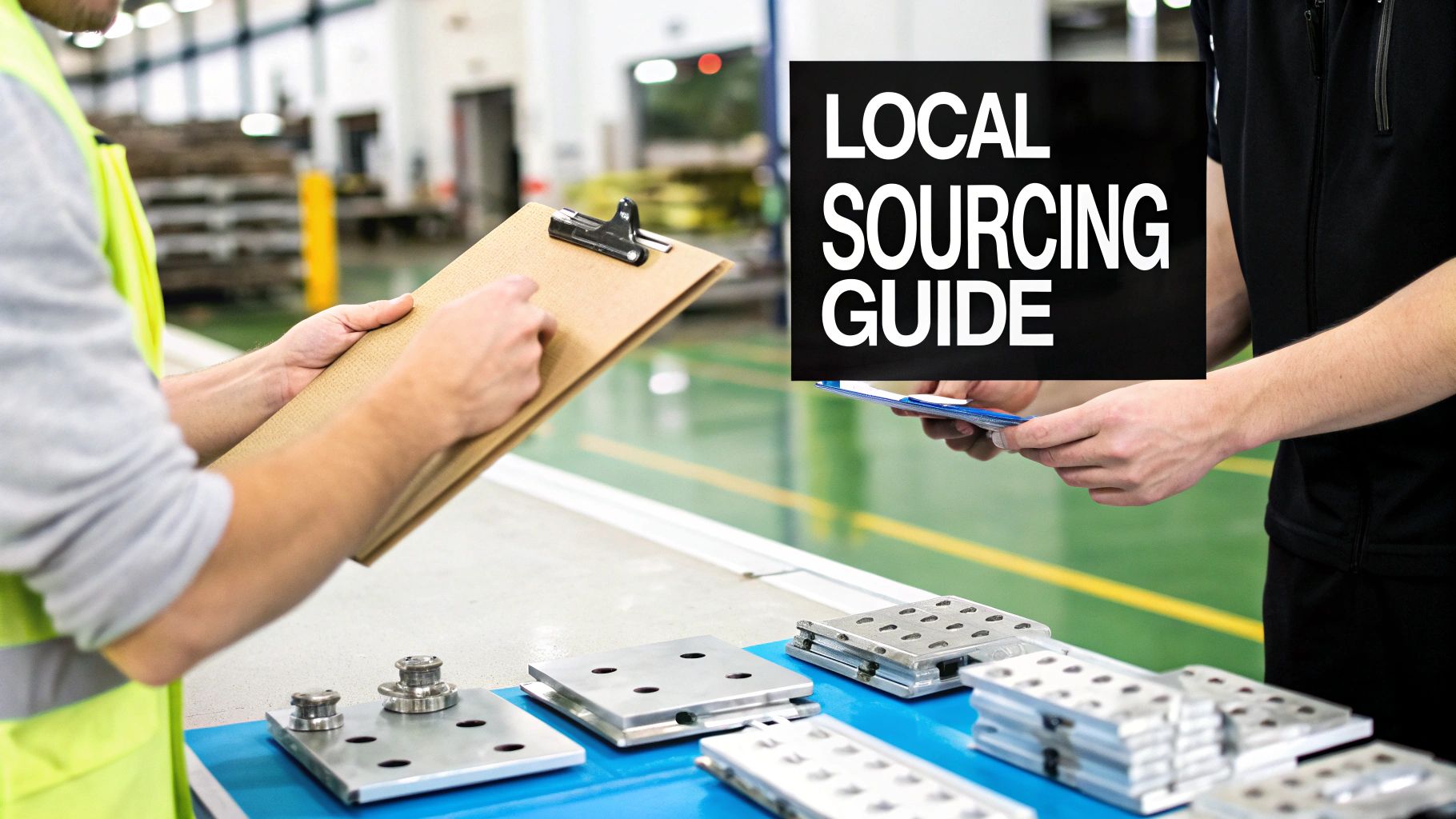
Just stop and think about the logistics for a moment. You're thousands of miles away, dealing with different time zones, and trying to understand a business culture that's worlds apart from your own. Your sourcing agent is your physical presence, someone who can actually walk into a factory, check the production lines, and solve problems the moment they pop up. This hands-on involvement is priceless for keeping quality high and schedules on track.
A sourcing agent’s day-to-day responsibilities usually cover a few key areas:
- Supplier Identification: They don't just find any factory; they hunt down and thoroughly vet suppliers that meet your specific needs for quality, cost, and production volume.
- Price Negotiation: Armed with deep local market knowledge, they negotiate hard to get you the best possible pricing and more favourable payment terms.
- Quality Control Management: They set up inspection routines at different stages of production, catching defects and issues long before your products are packed up and shipped out.
- Communication Bridge: They smash through the language barrier, ensuring your technical specs and every little requirement are perfectly understood by the factory floor.
A Strategic Business Partner
At the end of the day, the best sourcing agents in China offer more than just operational help; they give you a real strategic advantage. China's manufacturing scene is enormous and incredibly complex. It's predicted that in 2025, China will be responsible for nearly 28% of all global manufacturing output, cementing its place as a production powerhouse. For small and medium-sized businesses, trying to tap into that without local expertise is a monumental task. A skilled agent makes it possible, turning what could be a high-risk gamble into a smooth and secure supply chain. You can learn more about this in this 2025 sourcing guide.
By handling everything from factory audits to pre-shipment inspections, a sourcing agent becomes your first line of defence against scams, shoddy quality, and frustrating production delays. This gives your business a critical competitive edge.
Weighing the Benefits Against the Risks
Deciding to bring a sourcing agent in China into your corner is a massive strategic move. It's one of those decisions that can either rocket your business forward or bog it down with a whole new set of headaches. Before you jump in, you need a clear-eyed view of both the incredible advantages and the very real pitfalls.
Think of it this way: the right agent is a force multiplier, giving you boots on the ground with expertise you simply couldn't replicate from thousands of miles away. But the wrong partnership? That can quickly turn into a costly mess of wasted time, lost money, and products that are nowhere near your standards. A balanced perspective is your best asset here.
The Powerful Upside of a Sourcing Partnership
The biggest, most immediate win you get with a great sourcing agent is tapping into their network. These folks have spent years, sometimes decades, building solid relationships with reliable factories. This means you get to skip the incredibly daunting and risky process of trying to find and vet suppliers from scratch. That connection alone is worth its weight in gold.
Then there's the negotiation. A seasoned agent is a pro at this. They live and breathe the local market, understand the true costs of manufacturing, and know the cultural dance of doing business in China. This almost always translates into better pricing, more flexible payment terms, and lower minimum order quantities (MOQs) than you could ever hope to get on your own.
Beyond the deal-making, their role in quality assurance is absolutely mission-critical. A good agent will be on the factory floor, performing inspections at crucial stages of production—from checking the raw materials to the final pre-shipment review. This hands-on quality control is your best line of defence against the nightmare scenario of receiving a container full of faulty products.
At its core, a sourcing agent’s job is risk management. They are your eyes, ears, and advocate, filtering out the bad actors, smoothing over communication gaps, and making sure the product you painstakingly designed is the exact product that lands on your doorstep.
Understanding the Potential Downsides
Of course, it's not all smooth sailing. The most obvious downside is the cost. Most agents work on a commission, typically charging 5% to 10% of your total order value. While the savings they find should more than cover this fee, it's still a direct expense you have to bake into your final product cost.
Another major risk is getting your wires crossed. If your agent doesn't truly get your product specs, your brand's quality bar, or who you're selling to, things can go sideways fast. This can lead to them picking the wrong kind of factory or green-lighting samples that completely miss the mark, leading to frustrating delays and costly rework.
Finally, you have to be aware that the industry has its share of unqualified or just plain dishonest operators. Linking up with a bad agent can open a can of worms, from them secretly taking kickbacks from factories (which inflates your costs) to outright scams. This is exactly why the vetting process we’ll get into later is so critically important.
Ultimately, making the call on whether to hire an agent comes down to carefully weighing these pros and cons.
Sourcing Agent Partnership Analysis
To make it even clearer, here’s a straightforward breakdown of what you stand to gain versus what you need to watch out for.
| Key Advantages (Pros) | Potential Disadvantages (Cons) |
|---|---|
| Instant Access to Vetted Factories: Leverage an agent’s established network of trusted suppliers. | Commission and Service Fees: Adds a direct cost to your product's total landed price. |
| Expert Price Negotiation: Achieve significant cost savings through local market knowledge. | Risk of Misalignment: Agent may not fully grasp your quality standards or brand vision. |
| On-Site Quality Control: Proactively catch defects and ensure product standards are met before shipment. | Potential for Dishonesty: Risk of kickbacks or partnering with an unqualified or fraudulent agent. |
| Bridge Language & Cultural Gaps: Ensure clear communication of complex technical specifications. | Loss of Direct Control: You are trusting a third party to represent your interests accurately. |
Looking at this side-by-side, it's clear that the value of a great agent is immense, but the risks of choosing a poor one are just as significant. The key is in the selection process itself.
How Sourcing Agent Fees and Commissions Work
Money is always a touchy subject in business, but understanding how sourcing agents in China get paid is crucial. It’s the foundation of a transparent, trusting relationship. Forget any ideas of mysterious backroom deals; the payment structures are usually quite straightforward and designed to align the agent’s success with your own. Getting this clear from day one is the best way to avoid future headaches.
The most common models you'll come across are percentage-based commissions, flat fees, and project-based payments. Each one makes sense for different scenarios, depending on what you're buying and how much of it.
This infographic breaks down the typical payment models you'll find when working with sourcing agents in China.
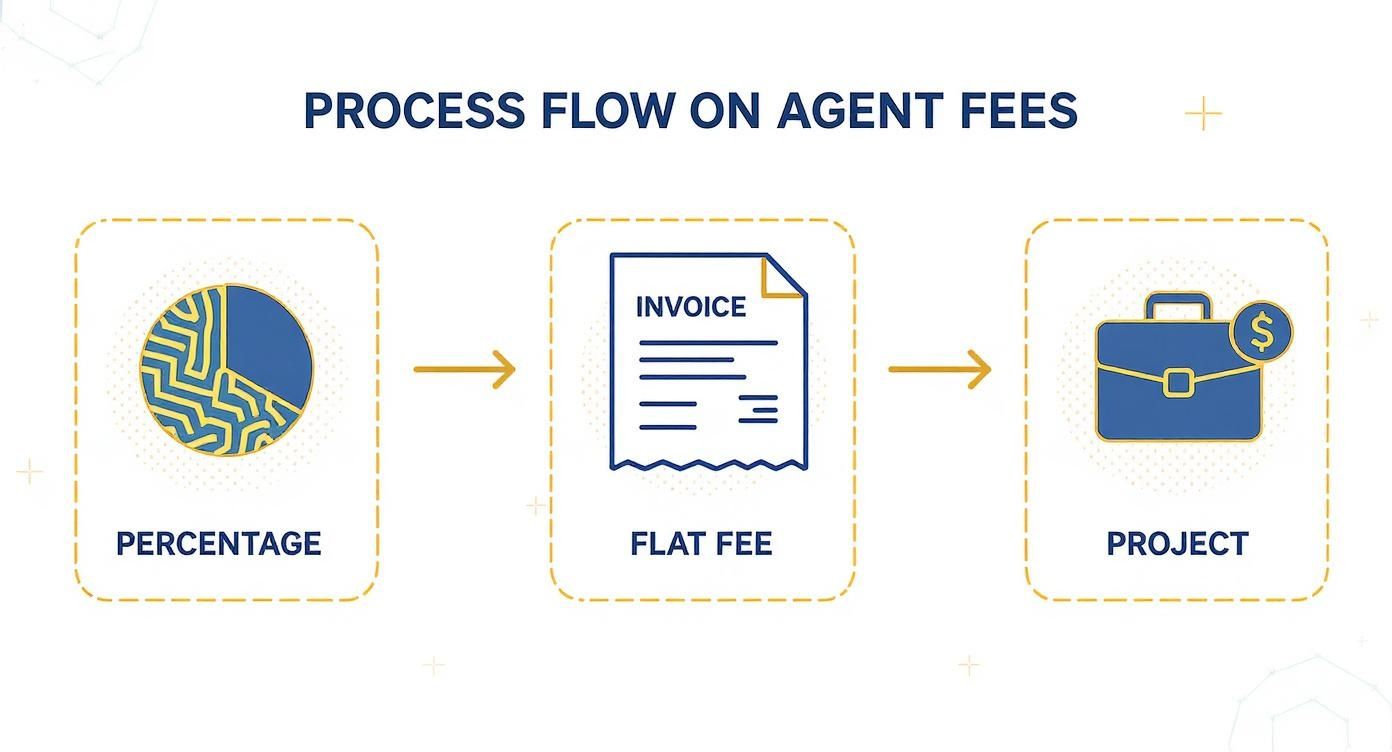
As you can see, each approach—from percentage to flat-fee—is built for different types of projects and business goals.
The Percentage-Based Commission Model
By far, the most common setup is the percentage-based commission. It’s simple: the agent earns a slice of your total order value. This fee usually lands somewhere between 5% and 10%, but it's not set in stone. The rate can dip for a massive, simple order, or creep up for a smaller, more technically complex one.
There's a good reason this model is so popular: it puts you and your agent on the same team.
- Incentivised Negotiation: Your agent is motivated to haggle for the best possible unit price. A lower price for you makes your product more competitive, which often leads to bigger or repeat orders—and that’s good for the agent in the long run.
- Based on Total Value: The commission is calculated on the total cost of the goods, which is typically the EXW or FOB price. It's really important to get your head around these shipping terms. You can learn more in our guide that explains the EXW price definition.
This model creates a real partnership. When your agent lands a better deal for you, it paves the way for a profitable relationship for both of you. It's about mutual success, not just a quick transaction.
Flat-Fee and Project-Based Structures
While percentage commissions are the go-to for ongoing production, other models work better for specific, one-time jobs. A flat-fee arrangement is perfect for these kinds of tasks where the scope is crystal clear from the start.
For instance, you might hire an agent for:
- A single factory audit: You pay a fixed price for them to go to a potential supplier and send you a detailed report on what they find.
- Sample collection: A set fee to gather samples from a few different factories and ship them to you for review.
- Pre-shipment inspection: A one-off payment for a final quality check before your goods are packed up and sent on their way.
This approach gives you predictable costs for very specific tasks. In a similar vein, a project-based fee covers a single, end-to-end sourcing project. This is a great fit for businesses launching a new product who need someone to manage the whole show, from finding the right suppliers to overseeing the first production run.
Spotting Hidden Costs and Negotiating Fair Terms
Transparency is absolutely non-negotiable. Before you sign anything, always insist on a clear, itemised breakdown of all potential fees. A good agent will be completely upfront about their charges and won't try to sneak in hidden costs.
Be very wary of agents who are cagey about their commission structure or seem to be getting kickbacks from factories. Those "sweetheart deals" almost always end up inflating your costs.
To get a better handle on how these payment models work in the real world, it's worth checking out these various commission structure examples. This knowledge will give you the confidence to negotiate a fair and open agreement, setting you up for a successful partnership with your sourcing agent in China.
Finding and Vetting a Trustworthy Sourcing Partner
Finding a great sourcing agent in China isn't something you can knock out with a quick Google search. Think of it more like hiring a key executive for your company—it’s a deliberate process of hunting down and qualifying the right person. Get it right, and your business can soar. Get it wrong, and you're in for a world of headaches.
The first step is knowing where the real pros hang out. Don't just stick to one channel; casting a wider net will always bring in a better catch of potential partners. The best place to start? Your own network. Ask colleagues or mentors who are already importing from China. A recommendation from someone who’s been in the trenches is worth its weight in gold.
Where to Find Potential Sourcing Agents
Beyond personal introductions, there are a few other hotspots where you can find high-quality agents. Each offers a unique way to connect with professionals who might be the perfect match for what you need.
- Professional Networks: Platforms like LinkedIn are a goldmine. You can dig into an agent's work history, see who's endorsed them, and get a solid feel for their areas of expertise. It's a great way to do some initial, low-stakes recon on sourcing agents in China.
- B2B Marketplaces: The game has changed, and digital platforms are now central. Big names like Alibaba and Global Sources have become essential hubs where you can find verified agents and suppliers, which cuts down on the risk of getting scammed. These sites have tools designed to connect you with the right people, making that initial search a lot less painful. For more on how the landscape is changing, Dragon Sourcing offers some great insights into international sourcing trends.
- Major Trade Fairs: There's still nothing quite like a face-to-face meeting. Big events like the Canton Fair are a fantastic place to meet serious, established agents in person. You can learn a lot about someone's professionalism and communication style just by shaking their hand. If you're heading there for the first time, our guide to the Canton Fair map is a must-read to help you find your way around.
Your Comprehensive Vetting Checklist
Okay, so you've got a shortlist. Now the real work starts. Vetting isn't just a formality; it's how you weed out the amateurs and find a true expert who will genuinely protect your interests. It’s all about verifying that they are who they say they are.
Start with the absolute basics: ask for their business license. This one simple step confirms they're a legally registered company in China and will filter out a surprising number of pretenders right away. While you're at it, verify their physical office address—a legitimate agency has a real place of business, not just a P.O. box.
Next, get specific about their experience. An agent who’s an expert in consumer electronics probably isn't your best bet for sourcing high-end textiles. Ask to see a portfolio of products they’ve handled in your niche and quiz them on their factory network for that specific category.
A great agent’s value comes from their specialised knowledge and connections within a particular industry. Don’t settle for a generalist if your product requires specific manufacturing expertise.
Key Interview Questions to Ask
The interview is your chance to really see what they're made of. You need to gauge their expertise, see how they handle problems, and get a feel for their communication style. Forget the softball questions; you need to dig deep into how they actually operate.
Here are a few sharp questions to help you separate the pros from the posers:
- "Can you walk me through your quality control process, step by step?" You're listening for specifics here. Do they mention multi-stage inspections (before, during, and after production)? Do they provide detailed reports with photos and videos?
- "What's your plan B when a supplier fails a quality inspection?" A seasoned agent won't panic. They'll have a clear protocol for getting things fixed, renegotiating, or—if it comes to it—finding a new supplier without missing a beat.
- "How often will I hear from you during a project, and how do you prefer to communicate?" This is all about setting expectations. You need to make sure their style lines up with what you need to feel comfortable and informed.
- "Could you put me in touch with three clients you've worked with in my industry?" This is the ultimate test. Speaking directly with past or current clients is the best verification you can get. A confident, capable agent will have no problem providing references.
Don't cut corners when vetting potential sourcing agents in China. Taking the time to do your homework—checking credentials, assessing real-world experience, and asking tough questions—will pay off massively in the long run, laying the groundwork for a secure and profitable partnership.
Setting Up Your Partnership for Success
So, you’ve found a promising sourcing agent in China. That’s a huge step, but the real work is just beginning. Turning that initial conversation into a smooth, profitable partnership hinges on two things: a rock-solid legal agreement and a no-nonsense quality control process.
Think of it like building a house. You wouldn't start without a detailed blueprint and a structural engineer. Skipping these steps in sourcing is just as risky—it’s a recipe for things to fall apart down the line. A verbal agreement simply won’t cut it.
Crafting a Bulletproof Sourcing Agreement
A formal, detailed sourcing agreement is the single most important document you'll create. It's not just a formality; it’s the rulebook for your entire project. It gets you, your agent, and the factory all on the same page, spelling out exactly what’s expected. When (not if) disagreements pop up, this document is what you’ll turn to.
Your agreement needs to be thorough, leaving zero room for guesswork. While you should always have a lawyer give it a final look, make sure these non-negotiable clauses are in there from the start.
- Detailed Product Specifications: Don't just write "blue widget." Get specific. We're talking technical drawings, exact materials, Pantone colour codes, precise dimensions, weight, and even the nitty-gritty of your packaging requirements. The more detail you provide, the less room there is for error.
- Clear Quality Standards: You have to define what "good enough" actually means. Specify your tolerance for minor defects versus what you consider a major, deal-breaking flaw. Lay out the exact testing methods that will be used. This creates an objective benchmark that isn't open to interpretation.
- Intellectual Property (IP) Protection: This is huge. You need a clause—often called an NNN (Non-Disclosure, Non-Use, Non-Circumvention) agreement—that is drafted in Chinese and enforceable in a Chinese court. It’s your best defense against finding your designs being copied or sold directly to your competitors.
- Payment Terms and Schedule: Be crystal clear about who gets paid and when. A common and fair structure is a 30% deposit to kick off production, with the final 70% balance paid only after the goods have passed a final quality inspection, but before they leave the factory.
As you hash out these details, remember that consistent communication is key. Be aware that some Western tools can be tricky to access in China, so you might need a plan to maintain access to vital communication tools like Gmail.
Implementing a Rigorous Quality Control Process
Your sourcing agreement lays down the law, but your quality control (QC) process is how you enforce it. A good agent doesn't just place orders; they act as your eyes and ears on the factory floor. This hands-on oversight is your insurance policy against a shipping container full of disappointment.
Think of quality control not as a single event, but as a series of checkpoints. Each inspection is an opportunity to catch potential issues early, when they are far easier and cheaper to fix, preventing them from derailing your entire production run.
A solid QC plan involves inspections at several key moments.
The Key Stages of Product Inspection
You can't just check the products at the very end and hope for the best. A comprehensive QC plan is woven throughout the entire manufacturing timeline. Your agent should be performing inspections at these critical stages to protect your investment.
- Pre-Production Samples (PPS) Review: Before a single unit is mass-produced, you must sign off on a final sample. This "golden sample" is the gold standard. It becomes the physical benchmark that every other product will be compared against.
- During Production Inspection (DPI): Once about 15-20% of your order is finished, your agent needs to be at the factory inspecting that first batch. This early look is absolutely crucial for spotting any recurring issues with machinery, materials, or the assembly process before they ruin the whole run.
- Pre-Shipment Inspection (PSI): This is the final exam, and it's the most important one. When the order is 100% complete and at least 80% packed, your agent conducts the final inspection. They’ll randomly sample products according to internationally recognized standards (like AQL) to confirm the shipment meets the quality you defined in your agreement. You should only release that final payment after your goods have passed this inspection. It's how you hold the factory accountable.
Managing Shipping Logistics and Customs Clearance
Your products have passed the final quality check. That's a huge milestone, but the journey is far from over. Now comes one of the most challenging parts: moving your goods from the factory in China to your warehouse. This is where your sourcing agent's job shifts from managing production to coordinating complex international logistics.
A great agent acts as the essential link between your factory and your freight forwarder. They make sure the production wrap-up lines up perfectly with the shipping departure dates. Without this coordination, your finished products could sit in a warehouse, collecting dust and expensive storage fees. This seamless handover is the key to a predictable and efficient supply chain.
Navigating Shipping Terms and Options
International shipping is a world of its own, full of confusing acronyms. Your agent is there to cut through the jargon and help you understand the terms that matter most. Two of the big ones you’ll run into are FOB (Free On Board) and DDP (Delivered Duty Paid).
- FOB (Free On Board): Under FOB terms, the factory’s job is to get your goods to the agreed-upon port in China. The moment your cargo is loaded onto the ship, responsibility flips to you. From that point on, you handle the shipping costs, insurance, and customs. It gives you more control over your choice of logistics partner.
- DDP (Delivered Duty Paid): Think of this as the "all-in" option. The supplier, or your agent working with their logistics partners, manages everything—shipping, insurance, import duties, and final delivery right to your door. It’s hands-off and simple, but that convenience usually comes with a higher price tag.
Your agent will break down your order size, budget, and delivery timeline to help you decide which option makes the most financial sense for your business.
The Agent's Role in Customs and Documentation
A smooth customs process is all about the paperwork. A tiny mistake on a commercial invoice, a packing list, or a certificate of origin can trigger major delays, intensive inspections, and even hefty fines. A professional sourcing agent in China is obsessive about preparing and cross-checking every single export document for you.
They work directly with your freight forwarder, feeding them all the necessary paperwork to ensure your shipment moves smoothly from the Chinese port into international waters. This proactive approach is absolutely vital. China's trade volume is staggering; in the first seven months of 2025 alone, the country's imports reached approximately US $1.45 trillion. An agent who knows this ecosystem inside and out understands how to keep your cargo from getting buried in the chaos. For more context, you can read about China's recent import data and trends.
While your sourcing agent manages the critical handover from the factory, a dedicated logistics partner is essential for the international journey. This partnership ensures that every detail, from booking space on a vessel to handling final import procedures, is managed by an expert.
This is why having a professional freight forwarder on your team is non-negotiable. To get a better grasp of what's involved, you can explore the professional customs clearance process that ensures your goods get across borders without any drama. This two-part strategy—agent on the ground in China, forwarder for the global transit—is how you build a truly resilient supply chain.
Frequently Asked Questions
Diving into manufacturing in China for the first time? You've probably got questions. Let's tackle some of the most common ones that come up when businesses start thinking about hiring a sourcing agent.
What’s a Fair Commission for a Sourcing Agent in China?
You'll find that most sourcing agents in China work on a commission basis, which usually falls somewhere between 5% and 10% of your total order value. This isn't a hard-and-fast rule, though. The final percentage often depends on the size and complexity of your order.
Think of it this way: a massive order for a simple, standardized product will likely land you a lower commission rate. On the flip side, a smaller, highly customized order that needs constant supervision will naturally command a rate at the higher end of that scale. Some agents might also offer a flat fee for specific, one-off jobs like a standalone factory audit.
Can’t I Just Find Suppliers on Alibaba Myself?
Absolutely, you can use a platform like Alibaba to find a long list of potential suppliers. It's a fantastic discovery tool. But discovering suppliers is only step one. An agent offers a level of on-the-ground service that a website simply can't match.
Your agent is your eyes, ears, and boots on the ground. Their real value is in managing risk. They personally vet factories, negotiate with a deep understanding of the local business culture, oversee quality control during production, and navigate the maze of local logistics. This is what prevents costly delays, quality disasters, and outright scams.
This hands-on presence means problems get solved before they escalate, protecting your investment and your brand's reputation.
How Do I Stop My Product Idea from Being Stolen?
Protecting your intellectual property (IP) is paramount, and it’s not something to take lightly. Your first and most powerful line of defence is a well-drafted NNN (Non-Disclosure, Non-Use, Non-Circumvention) agreement. You need this signed by both your sourcing agent and the factory before you share any sensitive details.
Here's the critical part: this agreement must be written in Chinese and structured to be enforceable in a Chinese court. An English-language NDA is practically worthless. It’s also a smart move to register your trademarks and patents in China before production ever begins. A good sourcing agent will not only understand this but will insist on it, helping you navigate these legal steps as a fundamental part of their service.