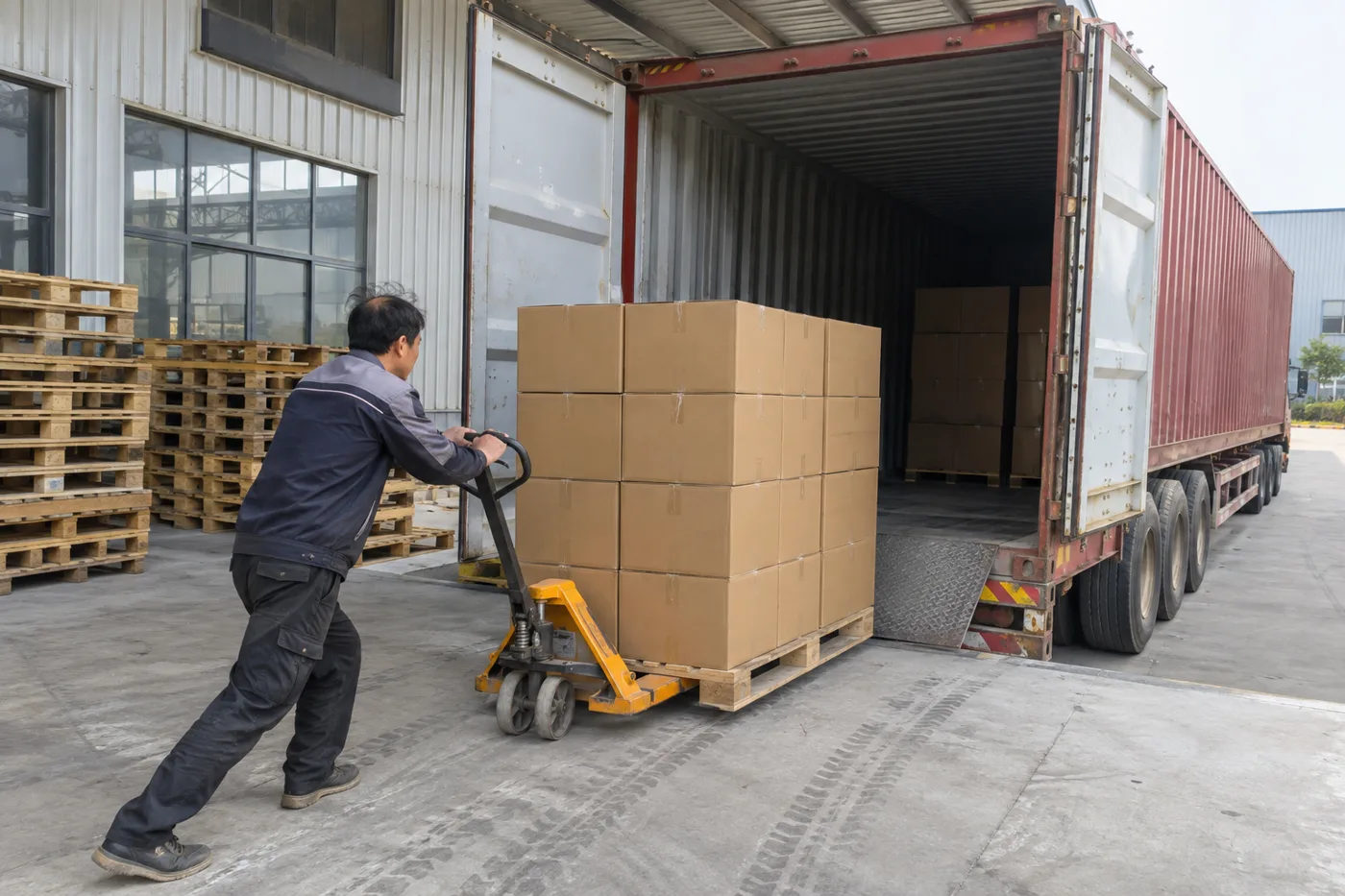
The short answer: DDP, or Delivered Duty Paid, is a door-to-door deal where the seller or forwarder handles factory pickup, export clearance, freight, US import customs clearance, duties and taxes, and final delivery for one quoted price. That price is honest only if it is big enough to cover the real duty on your goods, rather than processing fees alone, and the paperwork shows the duty was paid.
Take a hypothetical order priced three ways. The first is $10,000 with the goods collected at the factory gate. The second is $11,000 delivered to your door with you paying the import charges (DAP). The third is $11,200 delivered with everything paid (DDP).
That last $200 is supposed to buy US customs clearance, every import fee and every tariff. On a $10,000 shipment by sea, it can't. Customs fees take about $47 of it. That leaves room for duty of roughly 1.5%, and since July 2026 most Chinese goods pay an extra 12.5% on top of their normal rate.
DDP shipping from China can be a good, simple way to import. Here's how to tell a real deal from one that only looks cheap, before your goods are on the water. This guide covers imports into the US. The UK, the EU, Canada and Australia have their own import rules (our country guides set them out), but the price gap test below works anywhere.
What does DDP shipping from China actually include?
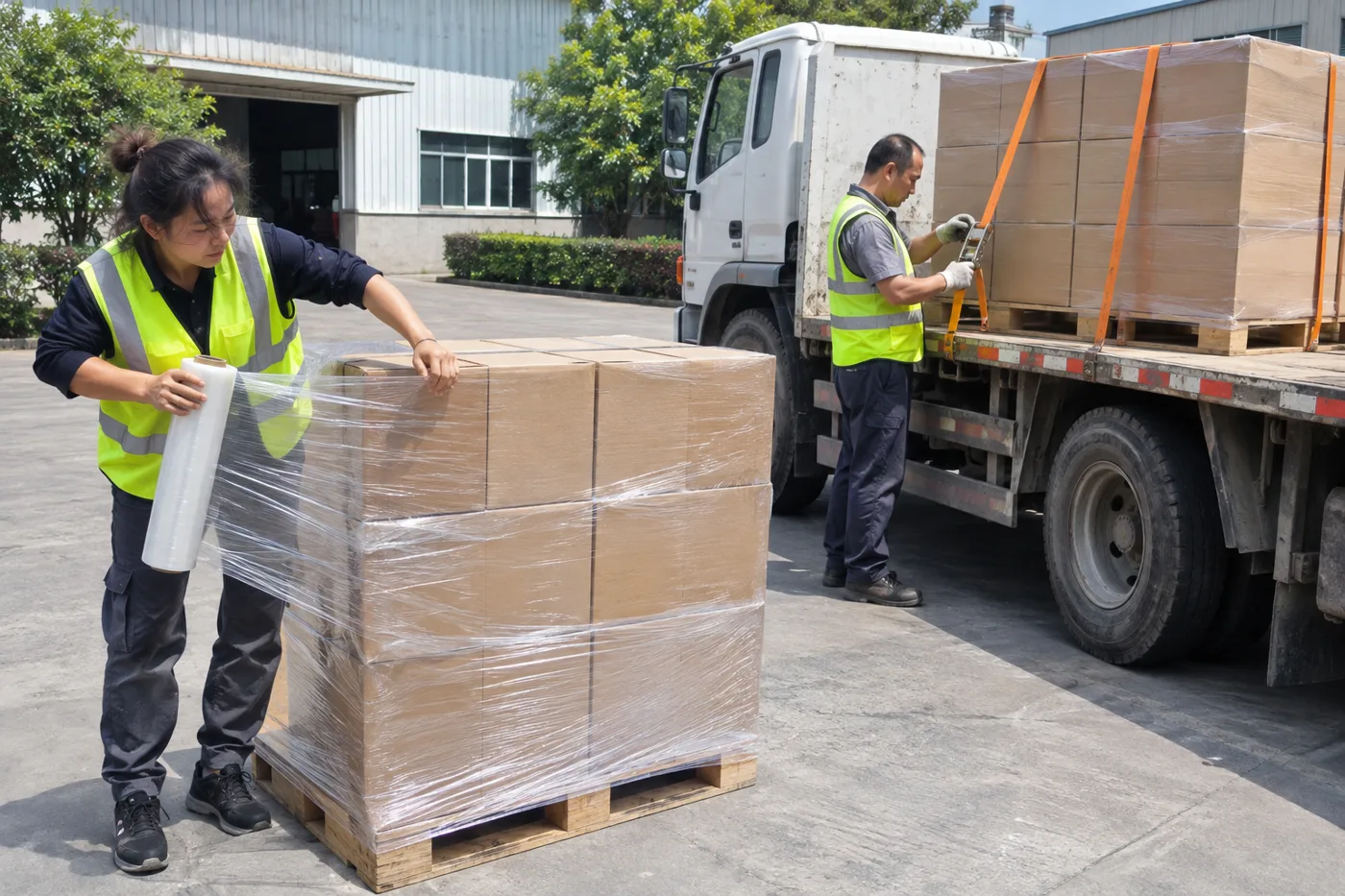
DDP stands for Delivered Duty Paid. It's one of the Incoterms, the standard trade rules published by the International Chamber of Commerce (ICC) that set out who arranges and pays for each leg of a shipment.
Under DDP, the seller, or a forwarder working for them, moves your goods from the factory to your door and handles customs clearance at both ends. The ICC's academy draws the line plainly. With DDP, the seller assumes responsibility for carrying out and paying for import clearance.
That's the rule. In practice, "everything included" means whatever your contract lists, so get the list. Alan Xiao, founder of Sourcing Pioneer, says a DDP contract should name all origin fees, export customs, international freight, import duties, tariffs, terminal handling, and liftgate delivery.
He adds one more line for the contract: who pays if tariff rates change while your goods are in transit. Rates on Chinese goods changed as recently as July 2026, when an extra 12.5% tariff took effect. A quote that says nothing about it leaves the question open until the goods land, and by then the invoice is in your hands.
DDP vs DAP: who pays duty, and who is the importer of record?
The whole difference sits at US customs. Under DAP (Delivered at Place), the seller gets the goods to your door but stops at the border. You clear them and pay the import duties and taxes. Under DDP, the seller does that part too. In the ICC's words, under DAP, the buyer is responsible for carrying out and paying for import clearance.
That one difference decides whose name sits on the customs entry and which papers end up in your files. US law says the entry is made by the importer of record, who must be the owner or purchaser of the goods, or a licensed customs broker they designate. A customs broker is a licensed agent who files the entry for an importer.
| Question | DAP | DDP |
|---|---|---|
| Who clears customs and pays duty | You, or a broker you hire | The seller or their forwarder |
| Who is usually importer of record | You | A party on the seller's side |
Two catches matter before you pick either term.
First, the label on the quote may not match the term. Sourcing Pioneer warns that a supplier's "door-to-door" shipping is often DAP: goods arrive at your local hub, but you get a surprise tax invoice before delivery.
Second, DDP doesn't fit every country. The ICC notes that some customs authorities require the local importer to carry out the import clearance themselves. Where the seller can't clear the goods, it says DAP is the right rule.
Delivered duty paid from China: whose name goes on the customs entry?
Whoever is named as importer of record carries the legal duty to declare the goods correctly. US law requires that party to act using reasonable care. Under most DDP deals, that name belongs to someone on the seller's side.
That's about to get harder for foreign companies. US Customs and Border Protection (CBP) published a rule called "Heightened Requirements for Foreign Importers of Record" on November 6, 2026. It takes effect on January 5, 2027. From then on, a foreign importer of record that isn't CTPAT-validated must designate a customs broker that is licensed and CTPAT-validated.
The entry forms change too. Forms 3461 and 7501 get new fields declaring whether the importer of record is a US company, how the broker is acting, and who the principal is. CBP says it may take enforcement action when an entity is inaccurately identified as a U.S. IOR.
Which companies count as a US importer of record from January 5, 2027
- Located in the US, and
- organized under US law, and
- either at least 51% owned and controlled by US citizens or permanent residents, or the direct owner of a significant amount of unencumbered US real property.
CTPAT validation today
- Only Canadian foreign importers of record can currently get CTPAT validation.
- About 21% of active brokers (643 of 3,100) hold CTPAT validation. A foreign importer of record will need one of them.
Those figures come from a summary of the rule by the law firm Squire Patton Boggs. For you, that means a Chinese seller's DDP setup that worked in 2026 may need a new broker, or a new name on the entry, after January 5.
The name also decides who gets money back. When CBP opened its refund process for the IEEPA tariffs in April 2026, it was the importer of record that filed the refund declaration and received the refund. A DDP buyer who wasn't the importer of record wasn't the party paid, even if the duty was built into their price.
Can the DDP price gap really cover duty and fees?
You can test this yourself with two quotes and a calculator. If the gap between the DAP and DDP price is smaller than the duty plus the US customs fees, the duty isn't being paid at your goods' real value.
- Get a DAP quote and a DDP quote for the identical shipment: same goods, same quantity, same delivery address. The difference between them is your gap.
- Find the duty rate for your product's HTS code, the classification number US customs uses, on the USITC Harmonized Tariff Schedule. Since July 24, 2026, Chinese goods also pay an extra 12.5% under a trade action called Section 301. Goods covered by a separate tariff program, Section 232, are excluded from it. For everything else, the 12.5% comes on top of the older Section 301 China tariffs from 2018 and 2019, where your product carries them. Ask a broker to confirm the full rate for your code.
- Multiply your goods' value by that total rate. That's the duty.
- Add the Merchandise Processing Fee on formal entries: 0.3464% of value, never less than $34.58 or more than $670.86. By sea, add the Harbor Maintenance Fee, 0.125% of value. It applies only to cargo loaded on or off a commercial vessel, so air freight doesn't pay it.
- Compare. If the gap is smaller than steps 3 and 4 combined, something in the declaration is off.
Run the example from the top through it. On a $10,000 sea shipment, the processing fee is $34.64 and the harbor fee is $12.50, so the fees come to $47.14 before any duty. Take that from a $200 gap and $152.86 is left for duty. That covers a duty rate of 1.53%, about one-eighth of the extra 12.5% alone.
Here is the smallest honest gap on a $10,000 order at different total duty rates, worked out from CBP's current fee table:
| Total duty rate | Smallest gap by sea | Smallest gap by air |
|---|---|---|
| 0% | $47 | $35 |
| 5% | $547 | $535 |
| 12.5% | $1,297 | $1,285 |
| 20% | $2,047 | $2,035 |
| 25% | $2,547 | $2,535 |
| 37.5% | $3,797 | $3,785 |
For most Chinese goods, the realistic rows start at 12.5%. The lower rows only fit goods outside the extra tariff, and goods that also carry the older China tariffs land further down the table.
These are floors. A broker's fee, the customs bond and any difference in delivery scope all come on top. Your landed cost, what the goods cost you sitting in your warehouse, is the product price plus all of it.
Dan Harris and Adams Lee, lawyers at the firm Harris Sliwoski, put the rule bluntly: if the DDP price doesn't logically reflect post-tariff cost realities, assume it's concealing a compliance issue.
How does grey-channel DDP work, and what does it risk for you?
When the price can't cover the duty, the usual explanation is that the declared value, the product code or the quantity on the customs entry isn't true. Importers and forwarders in Reddit threads we read describe the same pattern. A DDP price only slightly above DAP, or a flat per-kilo rate with no duty line, usually means the goods are cleared under someone else's name. One forwarding-side commenter described cargo cleared on a third-party trading company's bond, with the buyer's company appearing nowhere on the entry.
CNBC reported in May 2025 that Chinese exporters offering DDP undervalue and mislabel shipments through freight forwarders. The goods go through shell companies that act as importers of record, and when those companies' customs bonds run out, they dissolve. David Forgue, a partner at Barnes, Richardson & Colburn, told CNBC: "Often these companies don't bother to file bankruptcy. They simply turn off" their phones. Ash Monga, CEO of Imex Sourcing Services, added: "Opening a shell company is easy, you can do that in a couple of hours."
You might assume a fake value is the shell company's problem. Harris and Lee disagree, writing that liability attaches to conduct, not just to names on forms.
"DDP might shift who fills out the paperwork but it doesn't shift legal accountability." (Dan Harris and Adams Lee, Harris Sliwoski)
They cite Byer California, a US apparel buyer that settled for $325,000 under the False Claims Act over undervalued DDP shipments.
The main customs penalty law bars anyone from entering goods through false statements or omissions, or helping someone else do it, whether by fraud, gross negligence or plain negligence. The maximum penalties are steep:
- Fraud: up to what the goods are worth in the US.
- Gross negligence: the lesser of that value or four times the duty lost.
- Negligence: the lesser of that value or twice the duty lost.
What paperwork should you get: CBP Form 7501, the invoice and real tracking?
If you buy DDP, ask for three things: the customs entry summary, the commercial invoice that matches it, and tracking that runs to your door. Each one matters later.
CBP Form 7501 is the entry summary, filed, with estimated duties attached, within 10 working days after the time of entry. Without it, you can't see what was declared for your goods. From January 5, 2027, it will also show whether the importer of record is a US company and which broker acted.
What a complete DDP paperwork trail looks like
- Form 7501, with a copy sent to you.
- The commercial invoice, showing the same value as the 7501.
- The HTS code promised to you in writing before the goods shipped, matching the code on the 7501.
- A master tracking number that works all the way to final delivery, plus proof of delivery.
- Every record kept for 5 years from the date of entry, the period US customs rules set.
The recordkeeping rule starts that clock at entry, not at delivery. If customs ever questions a shipment, the 7501 and the invoice are your proof of what was paid.
Sourcing Pioneer recommends getting the exact HTS code the forwarder will declare in writing before you pay, along with whether entry papers will come after clearance. Harris and Lee go further. They say to demand full access to customs documentation and to check the declared value and origin yourself. Hold the 7501 next to your invoice. The value on the entry should match what you paid.
Should you take the supplier's DDP quote or a freight forwarder's?
Get both, on the same written specification, and compare them line by line. A supplier's shipping price is convenient, but it may not be the best one. Some importers who later got an independent forwarder's quote found their supplier's shipping price had been marked up well above the market rate. That's the reason to get the second quote.
The price-gap test applies to a forwarder's quote as much as a supplier's.
The other difference is whose side the broker is on. Harris and Lee advise hiring your own US customs broker rather than relying on the supplier's chain. A forwarder you hire answers to you. A supplier's forwarder answers to the supplier.
To make the comparison fair, send every bidder the same sheet:
- Product, HTS code, value, carton count, weight and volume.
- Pickup address and delivery address.
- Whether delivery needs a liftgate or an appointment.
A quote that comes back with lines missing only looks cheaper.
Air freight DDP or sea freight DDP: what changes?
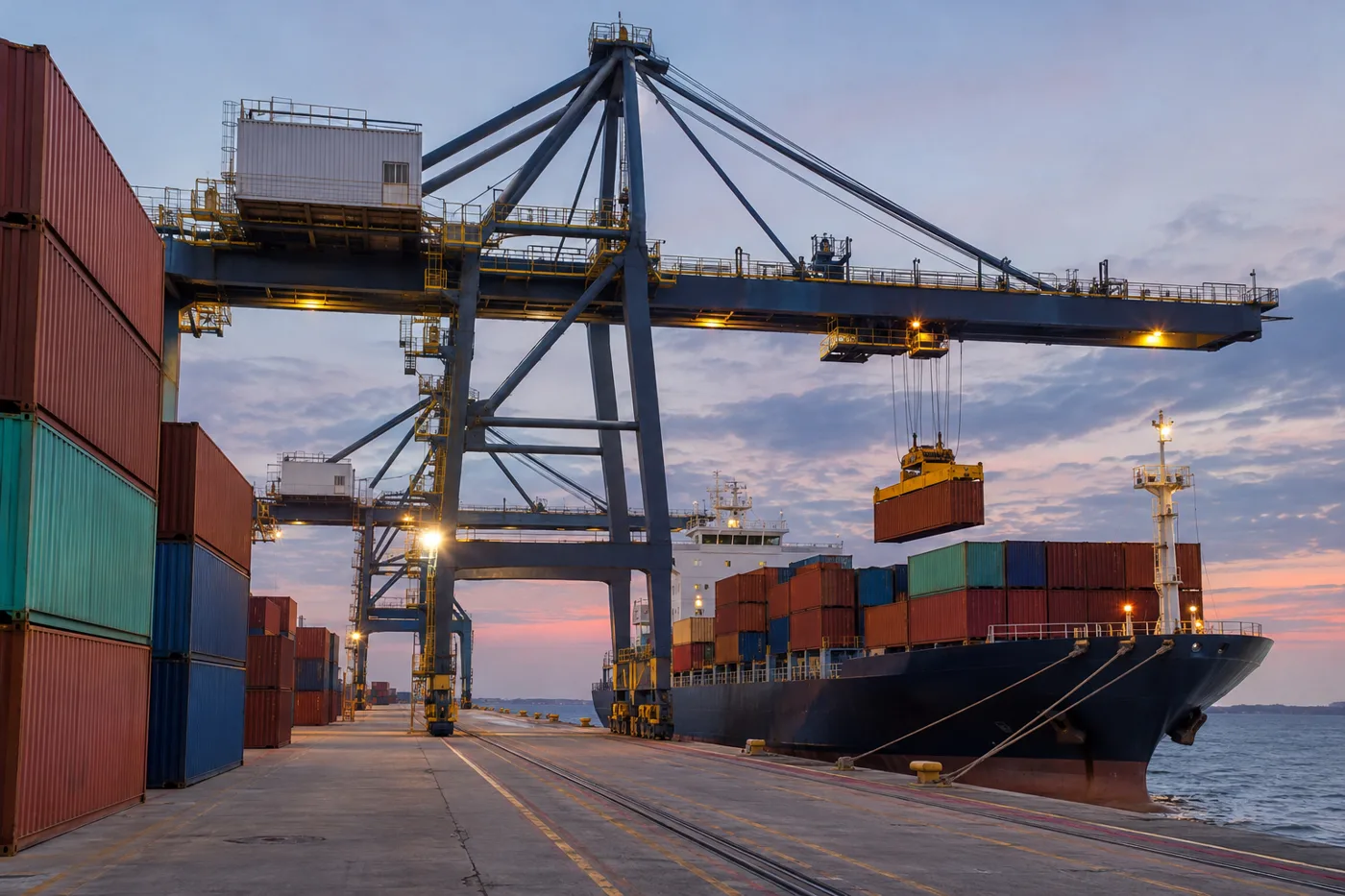
The choice between air and sea changes how your freight is priced, how long the trip takes, and one customs fee. It doesn't change the duty. Air freight DDP pays the same duty rate as sea freight DDP on the same goods.
Each mode is priced in a different unit, so make sure your quotes use the same one:
- Sea, full container load (FCL): priced per container.
- Sea, less than container load (LCL): priced per CBM (cubic metre of space).
- Air: priced per chargeable kilogram.
Freight rates on the China to US lanes move week to week, so treat any quote as good only for the date it's given. Our China to US guide shows the container rates and port-to-port days on our own rate sheet, with the date of the sheet.
Transit times need the same care. Port-to-port times leave out pickup, customs and the truck to your door, and a DDP quote is door to door. Ask whether the time quoted includes customs clearance and final delivery.
One fee does differ by mode. Sea DDP should carry the 0.125% Harbor Maintenance Fee; air DDP shouldn't. On a $10,000 shipment that's $12.50. It's small, but a quote that charges it on air freight, or leaves it out by sea, shows you how carefully the bidder built the price.
Can you ship DDP straight into Amazon FBA?
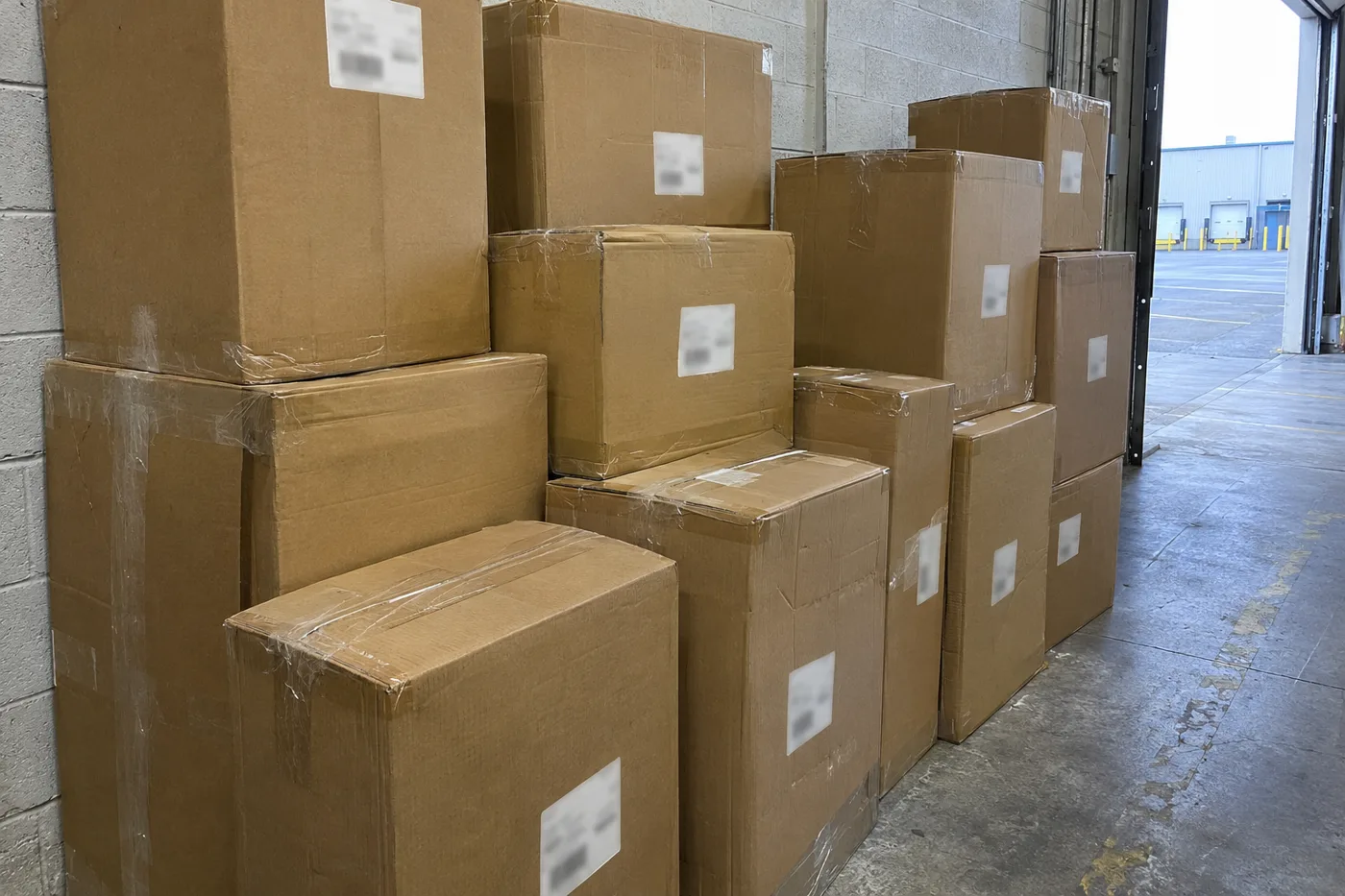
Yes, as long as nothing is owed when the goods arrive. Amazon won't import goods for you, and it won't pay duty at its door.
An Amazon moderator wrote on Seller Central that Amazon will not act as the IOR for your FBA inventory, "regardless of the shipment size or value." Trade Risk Guaranty, a customs bond provider, sets out the rest of the policy:
- Shipments that try to clear with Amazon as importer of record will be refused and returned at the shipper's expense.
- Shipments that arrive with collect charges, meaning any duties, taxes or shipping costs still due, will be refused.
- Amazon can be named as the ultimate consignee only with "in care of" before its name.
Steve Chou, who started an online store with his wife in 2007 and runs the MyWifeQuitHerJob channel about it, says that's why FBA sellers lean on DDP. "Amazon will refuse any inventory where the customs duties aren't paid and will return the shipment to China," he says. He recommends getting one quote from a forwarder that covers pickup through customs clearance, and asking for DDP by name.
The importer of record can be you, your forwarder or a party on the seller's side, but never Amazon. If it's a foreign company, the January 5, 2027 rule applies to your FBA shipments as much as any other. Ask now whether the setup still works after that date.
Small and trial orders now that de minimis is gone
Small orders pay duty now, whatever their value. De minimis was the rule that let low-value shipments into the US duty-free. CBP ended it for Chinese goods on May 2, 2025, and for all countries on August 29, 2025. Since then, every shipment needs a formal or informal entry and pays the duties, taxes and fees that apply.
That makes a cheap "duty included" price on a small parcel worth the same price-gap test as a full container.
Entry size cutoffs that matter now
- $2,500 or under: informal entry, which still pays duty, except Chinese goods over $250 carrying the extra China tariffs, which need a formal entry.
- Informal entry filed automatically: flat processing fee of $2.77.
- Formal entry: processing fee of 0.3464% with a $34.58 minimum, so about 1.15% of value on a $3,000 order.
- Any formal entry worth less than about $9,983 pays the flat $34.58.
The minimum fee hits small formal entries hardest. On a $3,000 order, 0.3464% would be $10.39, but you pay $34.58. The informal entry fees come from CBP's User Fee Table: $2.77 automated, $8.30 manual, $12.45 if CBP prepares it.
Informal entry has a carve-out that catches most Chinese orders. The rule allows it for shipments not exceeding $2,500, except articles over $250 classified in parts of Chapter 99 of the tariff schedule. China's extra tariffs sit in that part of Chapter 99, so a Chinese shipment worth more than $250 that carries them has to be formally entered and pays at least the $34.58 fee.
More change is coming. CBP proposed a "Low-Value Shipments" rule on October 8, 2026 that would require a bond on every informal entry and filing on or before the date of importation. Comments close December 7, 2026, and it isn't in effect yet.
First-time buyers in three r/Alibaba threads describe the same plan: use supplier DDP or a per-kilo DDP rate for a trial order, then hire their own broker once volume grows.
A per-kilo rate doesn't make the classification go away, though; it hides who did it and how. If a trial order has many products, list each one's HTS code before you ship. That list is what any honest DDP price has to be built on.
What to get in writing before you pay for DDP
Send these questions to every DDP bidder and get the answers in an email or contract, not a chat message.
- Who is the importer of record? Ask for the legal company name. If it's not a US company, ask whether it will qualify after January 5, 2027, and which CTPAT-validated broker it will use.
- Which customs broker files the entry? Get the broker's name.
- Whose bond covers the entry? A bond in the name of an unrelated trading company is the pattern grey-channel buyers describe.
- What HTS code will be declared? Get the exact code for each product, and check its duty rate yourself on the USITC schedule.
- What value will be declared? It should be what you paid.
- What does the price include? Duty, customs entry, final delivery, delivery appointment, liftgate and any storage. Each one is yes or no.
- Who pays if tariffs change in transit? Sourcing Pioneer's Alan Xiao says confirm it in writing.
- Will you send the Form 7501 after clearance? Ask for a copy for every entry.
- What's the master tracking number, and will I get proof of delivery?
A bidder who answers all nine is worth comparing on price. A bidder who won't name the importer of record has told you what you need to know.
Red flags: hidden fees, tracking you can't check and unlicensed forwarders
The clearest warning sign is a new charge after you've paid a DDP price. A Reddit user quoted on Alibaba.com's Seller Blog put it plainly: "If your supplier is asking for extra payments after quoting DDP, they either lied or are banking on you being stupid."
Red flags
- A new fee after payment that the written agreement doesn't cover.
- No master tracking number or delivery proof offered.
- A forwarder who contacted you first by direct message and isn't on the FMC's licensed list.
Before you pay anyone who reached out to you first by direct message, check them against the Federal Maritime Commission's list of licensed and bonded ocean intermediaries. That covers ocean forwarders and NVOCCs (non-vessel operating common carriers, companies that sell space on ships they don't own). The FMC also publishes a list of non-compliant NVOCCs, and that one is worth a look too.
Tracking needs the same check. Sourcing Pioneer advises getting master container tracking plus final delivery proof.
When DDP fits, and when to import yourself
DDP fits when all of these are true:
- You aren't ready to be an importer of record yourself.
- The seller's side names a real importer of record and broker that will still qualify after January 5, 2027.
- The price passes the gap test.
- The seller agrees in writing to send the 7501.
For a small first order or an FBA shipment that has to arrive with nothing owed, that can be a sound choice.
Import yourself, under DAP or a similar term with your own broker, when any of these is true:
- You want refunds you're entitled to. Refunds go to the importer of record, not to whoever paid the DDP price.
- You need your own records. If you can't get a 7501 for every entry, you won't have the five years of papers an audit would ask for.
- The seller can't clear goods properly. The ICC says that where the seller can't handle import clearance, DAP is the appropriate rule.
- The seller relies on a foreign importer of record. From January 5, 2027, that setup faces the CTPAT broker requirement, and only about a fifth of brokers can meet it.
Whichever you choose, the liability point holds. Harris and Lee's reading is that DDP doesn't shift legal accountability.
The bottom line
Before you pay any DDP quote, ask for a DAP quote on the same shipment and run the gap test. Look up your HTS code and any older China tariffs on it, add the extra 12.5% most Chinese goods now carry on top, then add the processing fee and, by sea, the harbor fee. If the gap is smaller than that total, walk away or switch to DAP.
If the price passes, send the nine written questions and don't pay until the importer of record, broker, bond and HTS code are named. A seller who answers clearly and agrees to send the 7501 is offering what DDP is meant to be.
If your goods' customs entry will be filed on or after January 5, 2027 and the importer of record isn't a US company, ask which CTPAT-validated broker will file it before you book. That applies even to goods that ship before that date, if the entry is filed after it.
Questions people also ask
Does DDP pay tariffs?
Yes, under a legitimate DDP deal the seller pays tariffs along with other import duties, because the seller takes on import clearance and its costs. The catch is the price. Since July 24, 2026, most Chinese goods pay an extra 12.5%, so a DDP price barely above DAP may mean the goods were declared below their true value.
Is Alibaba shipping DDP?
Some Alibaba suppliers genuinely offer DDP, but many "door-to-door" listings are really DAP and leave you with a tax bill on arrival. Sourcing Pioneer warns of exactly that: goods arrive at your local hub, but you get a surprise tax invoice before delivery. It advises putting the DDP scope, HTS code and entry papers in writing in your Trade Assurance agreement.
Who is the importer of record under DDP shipping?
The importer of record is whoever is legally named on the entry as the owner, the purchaser or the licensed broker they designate, and under most DDP deals that's a party on the seller's side. From January 5, 2027, a foreign importer of record that isn't CTPAT-validated must use a CTPAT-validated customs broker. Ask for the company's legal name in writing.
Will I get a CBP Form 7501 with DDP?
Not automatically, because no rule makes a DDP seller hand it over, so ask for a copy in writing before you pay. A 7501 is filed for each formal entry within 10 working days. Sourcing Pioneer recommends confirming whether entry papers will be provided before the goods ship.
How much is freight shipping from China to the USA?
There's no single price: full containers are quoted per container, shared sea freight per CBM and air per chargeable kilogram, and rates change week to week. Our China to US guide shows the container rates on our rate sheet, port by port, with the sheet's date. Duty and customs fees come on top of freight.
Can I send DDP shipments straight to Amazon FBA?
Yes, as long as every duty and freight charge is paid before the goods arrive. Amazon will not act as the importer of record, and shipments that arrive with charges still due will be refused. You or your forwarder must be the importer of record.