Ever found yourself needing to send a package that’s too big for the post, but not nearly big enough to fill a whole truck? That's a common headache in global shipping, and it’s where Less Than Container Load (LCL) comes in. Think of it like a rideshare for your cargo. Instead of booking an entire private car (a full container), you just pay for your seat.
So, What Exactly is Less Than Container Load Shipping?
LCL is a smart way to ship goods by sea when you don't have enough cargo to justify booking a whole container. Your shipment gets bundled together with goods from other companies inside a shared container. It's a game-changer for small and medium-sized businesses (SMEs) who need to get their products across the ocean without paying for empty space.
The main draw here is, of course, the cost savings on smaller shipments. You only pay for the volume your goods take up, measured in cubic metres (CBM). This makes international shipping far more approachable, especially if you're a growing business trying to manage cash flow or dip your toes into a new market. The whole process—from grouping your cargo with others to carefully separating it at the destination—is handled by logistics experts called freight forwarders or consolidators at specialised facilities known as Container Freight Stations (CFS).
Why LCL is More Than Just a Cheaper Option
Don't mistake LCL for just a budget shipping method; it's a powerful tool for smarter inventory management. It allows businesses to send smaller, more frequent shipments, which fits perfectly with modern "just-in-time" supply chains. This means less money tied up in stock sitting in a warehouse and more capital available for you to grow your business. If you want to explore the bigger picture of ocean freight, our guide on shipping freight by sea is a great place to start.
The demand for this kind of flexibility is booming. The Asia-Pacific LCL market alone was worth around USD 22 billion and is expected to more than double to USD 46.2 billion by 2034. China is at the heart of this surge, making up nearly a third (32%) of that market. This explosive growth shows just how vital LCL has become for businesses navigating today's global trade routes.
To really get a feel for it, it helps to see LCL side-by-side with its all-or-nothing counterpart, FCL.
LCL is a great equaliser in global trade. It gives smaller companies a seat at the table, allowing them to use the same shipping lanes as the big players without needing to commit to massive orders. It turns the fixed cost of an entire container into a flexible, variable expense that grows with your business.
How the LCL Shipping Process Works Step by Step
Shipping your goods via less than container load is a bit like a well-run carpool. Your cargo joins others for the main journey, making the whole trip more efficient. It’s a carefully choreographed process, with each step managed by logistics pros to get your items from A to B without a hitch.
Let's walk through the entire journey, from the moment you book your shipment to the final delivery at your door.
Step 1: Cargo Pickup and Consolidation
It all starts when you book with your freight forwarder. They’re the ones who quarterback the whole operation. Once you're booked, the first move is to get your cargo from your facility to a special warehouse near the port.
This isn’t just any warehouse; it’s a Container Freight Station (CFS). Think of it as the central meeting point for all LCL cargo. Here, your shipment is checked in, inspected, and logged. The real work then begins: consolidation.
This is where the magic happens. Your cargo is grouped with other LCL shipments heading to the same destination. Specialists carefully plan how to load everything into a shared container, like a game of Tetris, to maximise space and ensure nothing gets damaged on the high seas. It goes without saying that safe cargo handling, including proper forklift safety practices, is non-negotiable here.
Step 2: Ocean Transit to Destination
Once the container is packed and sealed, it’s off to the port and onto a massive container ship. This is usually the longest part of the trip. While it's sailing, your freight forwarder keeps an eye on the vessel's progress, giving you updates so you know where your goods are.
This leg of the journey really highlights how global shipping works. China's role is massive; for instance, major carriers have turned Shanghai into a global LCL hub. This has led to the creation of over 200 direct routes, which has seriously boosted consolidation capacity and cemented the region's importance in the LCL market.
The diagram below gives you a clear visual of how LCL shipments come together compared to FCL.
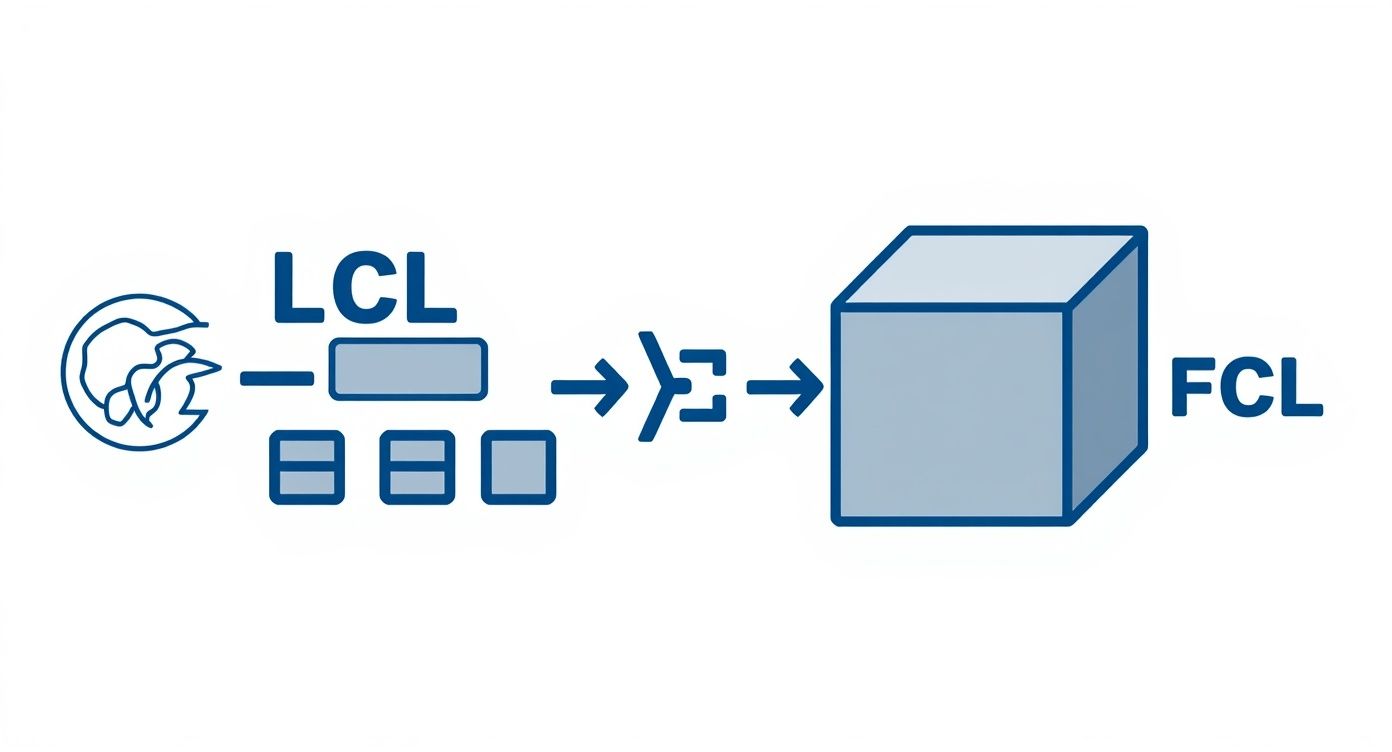
As you can see, LCL is all about bundling smaller shipments, whereas FCL is one shipper, one container.
Step 3: Deconsolidation and Customs Clearance
When the ship arrives, the container is moved from the port to another CFS at the destination. Now, the whole process happens in reverse. This is called deconsolidation. The container seal is broken, and all the individual shipments inside are carefully separated.
This is a critical checkpoint. Every shipment is cross-referenced with its Bill of Lading to make sure what was sent is what arrived.
It's a common mistake to think that a consolidated container clears customs in one go. The reality is that every single shipment inside that container has to go through its own, separate customs clearance.
Your customs broker will handle this, which typically involves:
- Submitting paperwork: All the essential documents, like the commercial invoice and packing list, are filed with customs.
- Assessing duties and taxes: Officials calculate what you owe based on the value and type of goods.
- Inspection and release: Sometimes customs will want a physical look. Once they're satisfied and all duties are paid, your cargo is officially released.
Step 4: Final Delivery to Your Door
Once your shipment has cleared customs, it's ready for the final leg—the "last-mile" delivery. Your freight forwarder will arrange for a truck to pick up your goods from the CFS and deliver them straight to your warehouse, distribution centre, or storefront.
And that’s it. The door-to-door LCL process is complete. Your shipment has passed through a network of experts, all working together to make sharing a container a smart, cost-effective choice for your business.
How Much Does LCL Cost and How Long Does It Take?
When you're planning an LCL shipment, two questions always come first: "What’s the final bill going to be?" and "When will my stuff actually get here?" While LCL is incredibly flexible, its pricing and timing are a bit more complex than a straightforward Full Container Load (FCL). Getting a handle on these moving parts is the secret to managing your budget and keeping your customers happy.
Unlike FCL, which has a simple flat rate for the whole box, LCL costs are based on what’s known as chargeable weight. This means the carrier will look at your cargo’s actual weight versus its volume and charge you for whichever is greater. The volume is measured in cubic metres (CBM), and the industry yardstick is usually 1 CBM = 1000 kg.
So, if your shipment is big and puffy but light, you’ll pay for the space it hogs. If it's a small, dense box of metal parts, you’ll pay for its weight. It's all about what costs the carrier more to transport.
Breaking Down Your LCL Quote
An LCL quote isn't a single number. It’s a tapestry woven from several different charges that cover the journey from your supplier's door to yours. Understanding these pieces helps you spot hidden fees and compare quotes from different forwarders like a pro.
Here’s a look at what’s typically inside your total cost:
- Origin Charges: This covers all the local legwork before your cargo even sees the ocean. Think pickup from the factory, trucking to the Container Freight Station (CFS), and all the labour needed to load your goods into the shared container with everyone else's.
- Main Freight: This is the big one—the actual cost of the ocean voyage from the port of loading to the port of discharge. It's priced per CBM or per 1000 kg.
- Destination Charges: Once the ship docks, the work isn't over. These fees cover unpacking the container (deconsolidation) at the destination CFS, handling customs paperwork, and the final "last-mile" delivery to your warehouse or front door.
Always, always ask for an all-inclusive, door-to-door quote. It’s the only way to see the true cost. It's not unheard of for surprise fees to pop up at the destination if the initial quote wasn't comprehensive.
The LCL Tipping Point: When FCL Becomes Cheaper
There comes a point where shipping LCL actually becomes more expensive than just booking your own small FCL container. This is the breakeven point. It’s not set in stone—it changes with market rates and specific shipping routes—but a solid rule of thumb is to start getting FCL quotes once your cargo hits the 13 to 15 CBM mark.
Here’s something every shipper should know: LCL has a higher per-unit cost than FCL. As your shipment gets bigger, those handling and consolidation fees at both ends start to stack up fast. Suddenly, paying for a 20-foot FCL container—even if you don't fill it completely—can be the smarter financial move.
Of course, the first step is figuring out your shipment's volume. To get that right, check out our guide on how to calculate CBM for your shipment, which walks you through the simple formulas.
Why LCL Takes a Little Longer
The other crucial piece of the puzzle is time. LCL shipments almost always take longer than FCL on the exact same route. It’s not because the ship sails any slower; it's all about the extra steps required before and after the ocean journey.
Think of it like this: FCL is a non-stop taxi ride, while LCL is a city bus. The bus has to make lots of stops to pick up and drop off passengers, which naturally adds time to the trip.
Here’s where those extra days come from:
- Consolidation Time: It can take a few days at the origin warehouse to gather cargo from all the different shippers, check the paperwork, and carefully pack everything into one container. Your cargo might have to wait a bit for the container to fill up before it can leave.
- Deconsolidation Time: The same thing happens in reverse at the destination. The container is trucked to a CFS, where it’s carefully unpacked. Each individual shipment is then sorted and staged for customs clearance.
- Customs Delays: This is a big one. If just one person's shipment in that shared container has a customs issue, it can hold up the entire container for everyone.
As a general rule, you should plan for an LCL shipment to take an extra one to two weeks compared to an FCL shipment on the same sea lane. Factoring this buffer into your schedule is the key to setting realistic delivery dates and keeping your supply chain humming.
Protecting Your Cargo: A Guide to Smart Packaging and Insurance
When you ship less than container load (LCL), your cargo isn't travelling alone. It’s sharing a container with goods from other shippers, which means it will be handled several times—first at the warehouse when it's consolidated, and again at the destination when it's separated. This extra handling is just part of the LCL process, and it makes proper preparation absolutely critical.
Think of it this way: good packaging is your cargo's suit of armour, and insurance is its safety net. Getting both right is the only way to ensure your goods arrive safely, protecting both your investment and your reputation.
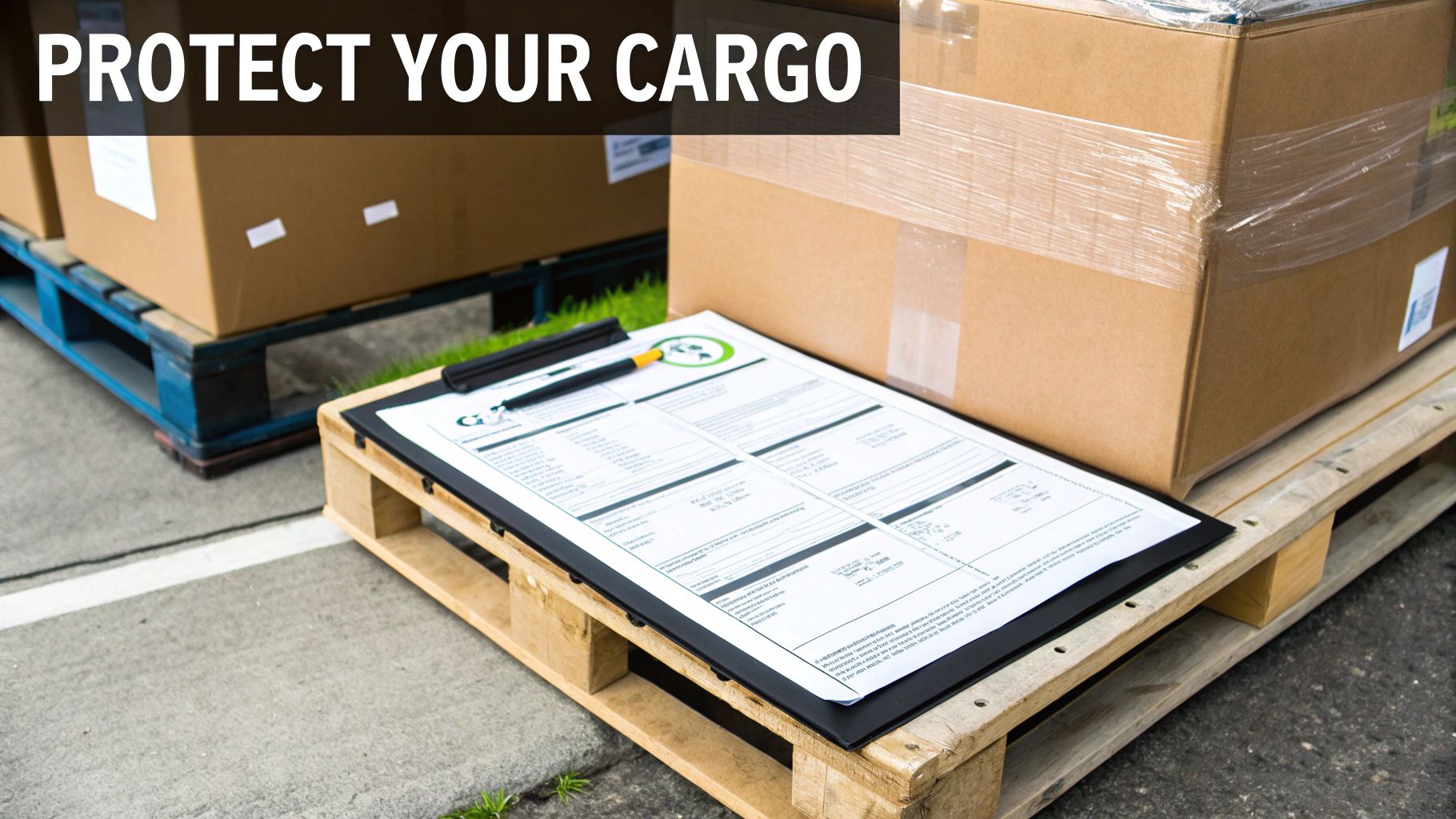
A Practical Checklist for LCL-Ready Packaging
Packing for an LCL shipment is about more than just finding a box that fits. You need to build a solid, secure unit that can withstand being moved, stacked, and jostled alongside other cargo. The goal is to make your shipment compact, stable, and easy to identify.
Here’s a checklist I’ve seen work time and time again:
- Use High-Quality Boxes: Don't cut corners here. Always start with new, double-walled corrugated cardboard boxes. Reused boxes lose their strength and are a common cause of damaged goods.
- Palletise Your Cargo: If you can, secure your boxes onto a sturdy, heat-treated pallet. This turns a pile of individual boxes into a single, forklift-friendly unit, drastically cutting the risk of damage from manual handling.
- Cushion and Protect: Fill every inch of empty space inside your boxes with bubble wrap, foam, or other dunnage to stop items from shifting around. Once packed, use shrink wrap to bind all the boxes tightly to the pallet, creating one solid block.
- Label Everything Clearly: This is non-negotiable. Every single box, plus the finished pallet, must be clearly labelled. Include the consignee’s details, destination port, and any special handling instructions like "Fragile" or "This Side Up." Good labelling is your best defence against mis-routes and mishandling.
Why Carrier Liability Is Not Enough
It's a common mistake to think the carrier's basic liability coverage has you covered. It doesn't. This is a crucial point many shippers misunderstand.
Carrier liability is minimal, often pennies on the dollar, and it's designed to protect them, not you. It usually pays out a tiny amount per kilogram, which will be nowhere near the actual value of your goods.
Relying solely on carrier liability is like putting a plaster on a serious injury. It provides a false sense of security and leaves your business financially exposed if something goes wrong.
This is exactly why dedicated cargo insurance is so important. A good "All-Risk" policy covers your goods for their full invoice value against almost anything that can happen in transit. It's the only real way to make sure you can recover your investment if the unexpected occurs. To learn more, our detailed guide on insurance options.
The need for secure logistics has never been greater. The Asia-Pacific LCL market, with China as its engine, is on track to hit USD 63.34 billion. This incredible growth, centred around massive ports like Shanghai and Ningbo, underscores the sheer volume of goods moving every day—and why managing risk for every single shipment has to be a top priority.
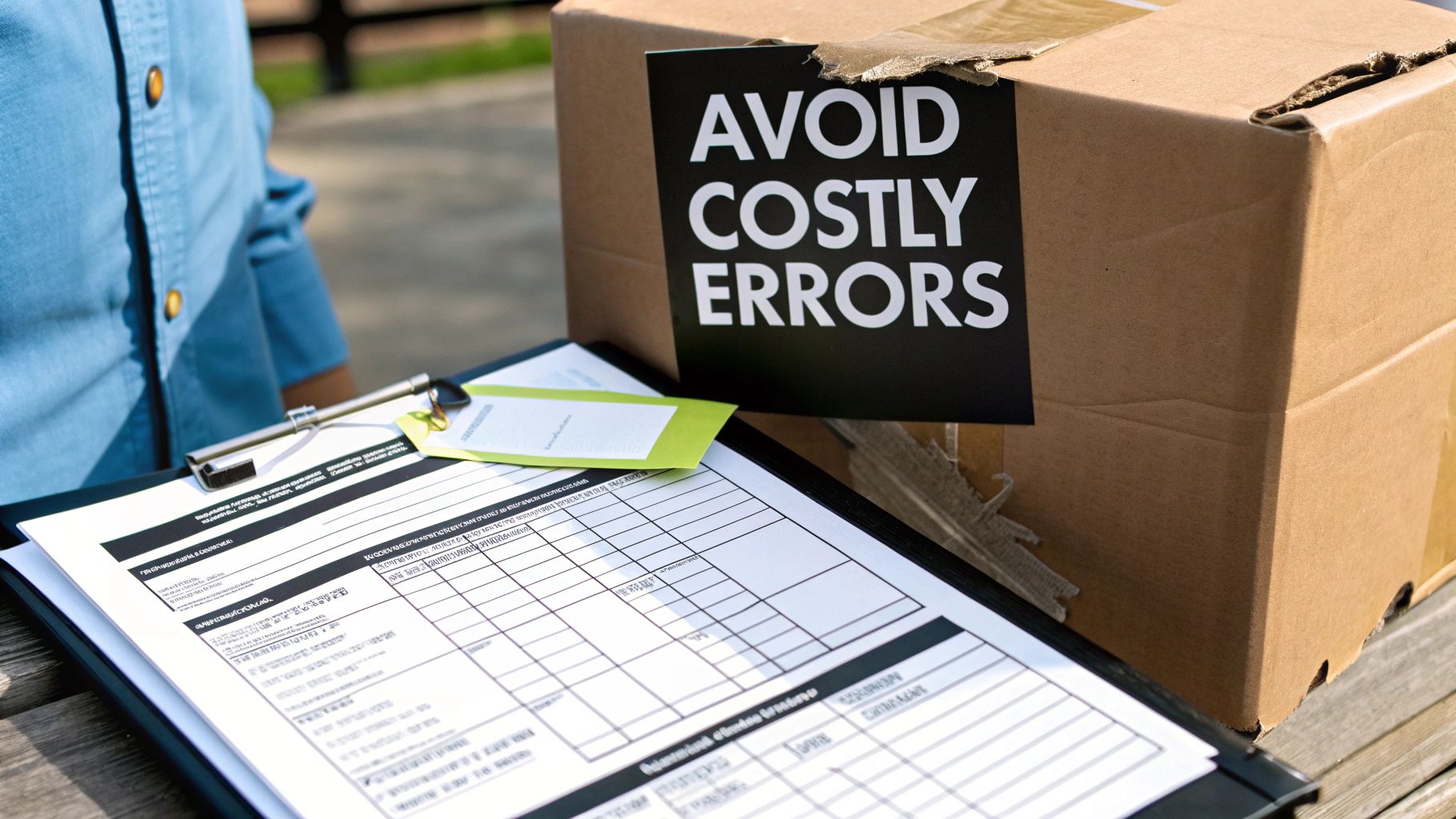
Common LCL Shipping Mistakes to Avoid
Shipping your goods via less than container load can be a brilliant move—it's flexible and often saves you a good chunk of money. But, like anything in logistics, there are a few traps for the unwary. A simple oversight can quickly turn a cost-effective shipment into a headache of surprise fees, frustrating delays, and damaged products.
The good news is that these problems are almost always preventable. Once you know what to look for, you can steer clear of the common slip-ups that catch even experienced shippers off guard. Let's walk through the big three so your next LCL shipment is smooth sailing.
Underestimating Total Costs
This is the classic LCL blunder. You get a quote that looks incredibly low, only to be hit with a slew of unexpected charges once your cargo reaches its destination. It's a common tactic used by some forwarders to hook you with a cheap base rate, knowing they can make it up on the back end.
So, what are these "hidden" costs? They often include:
- Destination Terminal Handling Charges (DTHC): The cost of shuffling the container around the port.
- Deconsolidation Fees: This is the labour charge for unpacking the shared container at the destination warehouse (CFS) and separating everyone's cargo.
- Customs Examination Fees: If your shipment gets pulled for a random or targeted inspection, that bill comes to you.
- Warehouse Storage Fees: These can pile up fast if your cargo sits uncleared for even a few extra days.
The Solution: Simple. Always demand a detailed, all-inclusive "door-to-door" quote. This makes the forwarder lay all their cards on the table, itemising every single anticipated charge from pickup to final delivery. No more nasty surprises.
Neglecting Proper Packaging
Thinking the cardboard boxes you use for domestic shipping will survive a multi-week international journey is a recipe for disaster. LCL cargo gets handled a lot—loaded onto a truck, unloaded at a warehouse, packed into a container, unpacked at the destination, and loaded onto another truck. Every touchpoint is a chance for damage.
A common misconception is that the container itself provides all the protection needed. In reality, your shipment must be robust enough to withstand being loaded, stacked, and moved alongside other, potentially heavier, cargo.
The Solution: Get your goods "LCL-ready." This isn't the place to cut corners. Use new, strong, double-walled boxes. Securely palletise your cargo to create a single, stable unit that a forklift can handle easily. Use plenty of internal cushioning and finish with a tight layer of shrink wrap. Good packaging is your best insurance policy.
Inaccurate Documentation
You'd be surprised how often a tiny typo on a shipping document can grind everything to a halt. A wrong product code, a mismatched quantity between the invoice and packing list, or an incorrect delivery address can trigger a customs hold.
In LCL, this is a shared nightmare. A documentation issue with just one small shipment can cause customs to flag the entire container, delaying delivery for everyone involved.
Common paperwork errors include:
- Incorrect product descriptions or HS codes.
- Mismatched quantities between the commercial invoice and the packing list.
- Inaccurate consignee (recipient) details.
The Solution: Treat your paperwork like gold. Double-check, then triple-check every detail before you submit anything. Even better, work with a freight forwarder you trust. A good partner will have a team that reviews your documents specifically to catch these kinds of errors, saving you from fines and delays before they ever happen.
Your LCL Shipping Questions Answered
Even when you've got a handle on the LCL process, specific questions always pop up. It's perfectly normal. Getting these details sorted is what turns a good logistics plan into a great one, helping you sidestep expensive mistakes and choose the right path for your cargo.
Let’s dive into some of the most common questions we hear from shippers about LCL.
What’s the Breakeven Point Between LCL and FCL?
This is the big one. At what point does it make more sense to just book a full container? The breakeven point is the volume where the total cost of your LCL shipment starts to creep up and match the price of a dedicated 20-foot FCL container.
While this number can fluctuate with market rates and specific trade lanes, a solid rule of thumb is to start getting quotes for both LCL and FCL once your cargo hits the 13 to 15 cubic metre (CBM) mark.
Once you’re over 15 CBM, FCL is almost always going to be the smarter financial move. Think of it this way: FCL is a flat-rate deal for the whole box, while LCL is priced per unit of space or weight. As your shipment gets bigger, those per-unit LCL costs, plus all the handling fees at both ends, really start to add up.
Can I Ship Hazardous or Temperature-Sensitive Goods via LCL?
The short answer is: it’s tricky. Shipping hazardous materials (HAZMAT) or cargo that needs to stay cold is possible with LCL, but it's a highly specialised and uncommon service. The logistical hurdles are significant.
- Hazardous Goods: When shipping HAZMAT, your cargo can't just be safe on its own—it has to be compatible with every single other item packed into that container. This means all shippers involved must navigate a maze of strict international maritime regulations. Unsurprisingly, most consolidators simply refuse this kind of cargo to avoid the immense risk.
- Temperature-Sensitive Goods: Refrigerated containers, known as "reefers," are almost exclusively an FCL affair. Finding an LCL reefer service is like searching for a needle in a haystack. Why? Because every single shipment in the container would need to be kept at the exact same temperature, which is a near-impossible coordination effort.
The key takeaway? Always be upfront with your freight forwarder about the exact nature of your goods. They're the only ones who can tell you if a niche LCL service for your specific needs actually exists on your route.
How Are LCL Dimensions and Weight Calculated for Pricing?
LCL pricing revolves around a concept called "chargeable weight." It’s a simple but crucial idea: the carrier will charge you based on whichever is greater—the actual weight of your cargo or its volume. This "whichever-is-greater" rule ensures they get paid fairly, whether they're moving a heavy but compact crate of engine parts or a big, fluffy shipment of pillows.
Here’s how it breaks down:
- Volumetric Weight: This is simply your cargo's total volume in CBM. You get this by multiplying Length x Width x Height (in metres).
- Gross Weight: This is what your cargo actually weighs on a scale, measured in tonnes (where 1 tonne = 1000 kg).
Let's look at a quick example. Say you have a large but light pallet that takes up 1.5 CBM but only weighs 300 kg (0.3 tonnes). You'll be billed for 1.5 revenue tons because its volume is the higher figure.
Now, flip that. Imagine a small, dense pallet of metal parts that only measures 0.5 CBM but weighs a hefty 800 kg (0.8 tonnes). In this case, you'll be billed for 0.8 revenue tons. Your final invoice will always be based on the bigger of these two numbers.