Think of an air cargo forwarder as the ultimate travel agent for your products. They're the critical go-between, connecting your business to the intricate world of cargo airlines. Their job is to manage every single logistical detail, making sure your goods get where they need to be, quickly and safely.
What Air Cargo Forwarders Actually Do
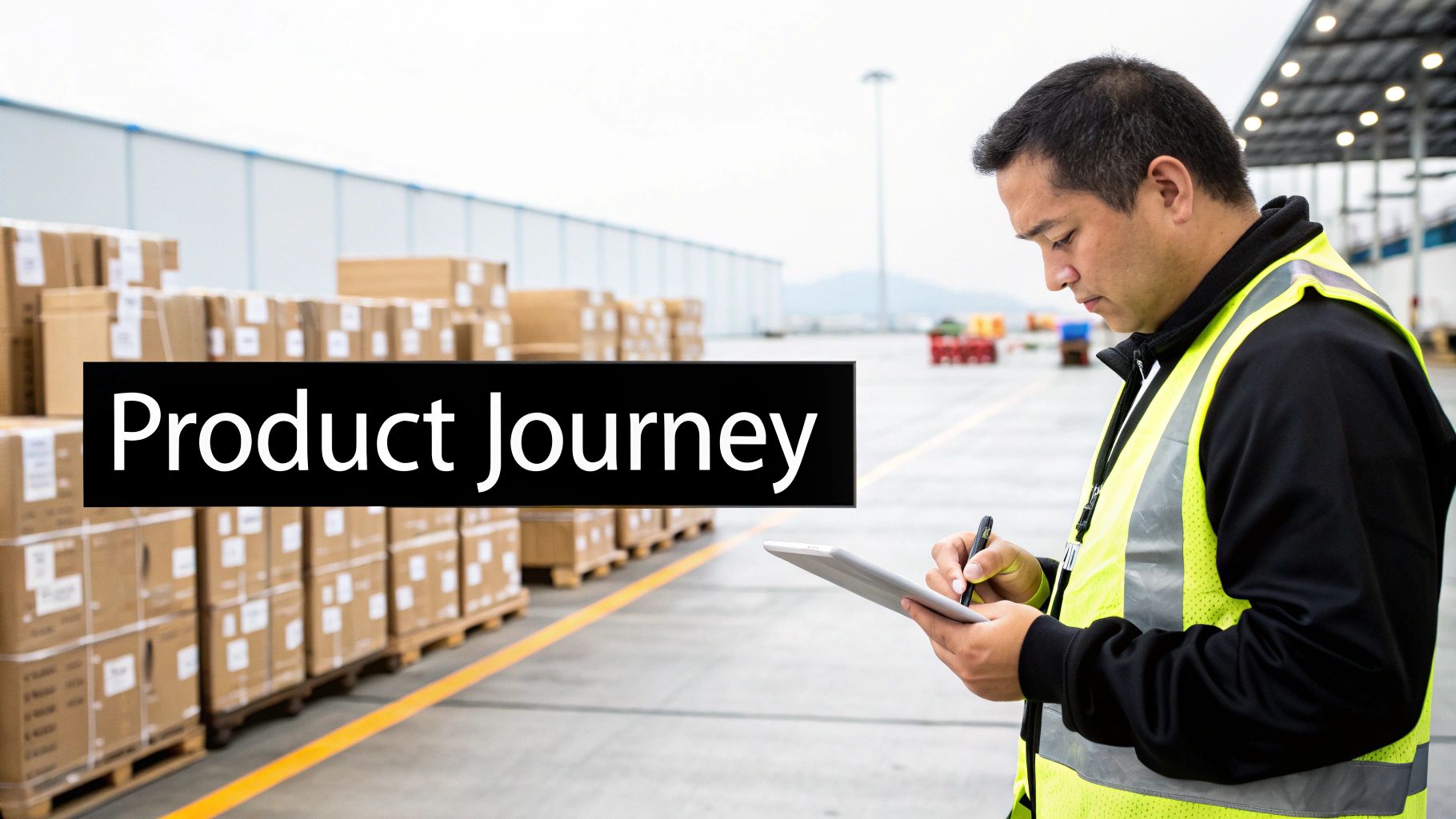
Let's imagine you have a time-sensitive shipment of electronics that needs to get from a factory in Shenzhen to a retail partner in London. You could try to piece it all together yourself—find a local trucker, book space directly with an airline, and then hire customs agents on both ends. It’s a huge headache, bogged down by complex regulations, multiple contracts, and a mountain of paperwork.
This is exactly the problem air cargo forwarders solve. They become your single point of contact, orchestrating the entire journey from start to finish. Instead of you having to manage a dozen different vendors, the forwarder handles it all.
The Forwarder as Your Logistics Partner
One common misconception is that forwarders own the aeroplanes. They don’t. Instead, they build strong relationships with multiple air carriers and use their massive shipping volumes to negotiate much better rates than a single business ever could. It’s the same reason a travel agency can often get a better deal on a hotel room than you can.
By consolidating freight from many different clients, they fill up cargo space far more efficiently, and you benefit from the savings.
But their real value goes way beyond just booking a flight. A forwarder's expertise is in managing all the little details that can make or break a shipment.
Here's what a good forwarder really does:
- Arranges End-to-End Transport: This isn't just the flight. It includes everything from collecting the goods at your factory to organising the final truck that delivers it to your customer's warehouse.
- Navigates Customs Clearance: They are experts in the paperwork. They handle all the import and export documentation to ensure your shipment sails through customs without getting stuck in red tape.
- Provides Strategic Advice: A true partner will help you weigh your options. Need it there yesterday? They'll find a priority service. Working with a tighter budget? They'll find a standard air freight solution that works.
- Secures Cargo Insurance: They can arrange insurance to protect your investment against loss or damage during its journey, giving you crucial peace of mind.
In short, an air cargo forwarder takes a process that feels fragmented and chaotic and turns it into a single, managed service. They’re the architect of your product's journey, handling all the complexity so you can get back to running your business.
For instance, a service like Upfreights manages shipments along major routes, like from China to the UK, with typical transit times of just 1–7 days. By handling the entire door-to-door process, they take the logistical weight off the shoulders of SMEs, making global trade feel simple and predictable. Their job is to cut through the complexity, minimise your risk, and make sure your products show up on time.
What Freight Forwarding Services Actually Involve
Thinking of a top-tier air cargo forwarder as just someone who books space on a plane is a bit like calling a head chef a "cook." It misses the point entirely. What you're really getting is a complete, end-to-end management service for your goods' entire journey. It’s less like buying a ticket and more like hiring a personal travel agent, concierge, and bodyguard for your products.
This all-in-one approach is what truly separates a basic agent from a genuine logistics partner. They sweat the small stuff—and the big stuff—behind the scenes so you can focus on running your business.
From Your Door to Theirs
The cornerstone of modern forwarding is door-to-door delivery. It’s as straightforward as it sounds: the forwarder manages the entire process, from picking up the cargo at your facility's loading bay to delivering it right to your customer's doorstep.
Having that single point of contact is incredibly powerful. No more juggling separate trucking companies, customs brokers, and warehouse teams in different time zones. The forwarder handles all those handoffs, creating one smooth, unbroken chain. For smaller businesses, this isn't just a convenience—it's a massive operational advantage.
The Critical Role of Customs Brokerage
Let's be honest: customs is where international shipping gets scary. Every country has its own labyrinth of rules, regulations, and required paperwork. One tiny mistake on a form can cause crippling delays, unexpected fines, or even see your entire shipment confiscated.
This is why expert customs brokerage is so vital. Your forwarder acts as your official representative, making sure every 'i' is dotted and 't' is crossed.
- Tariff Classification: They ensure your goods are correctly categorised, so you pay the right amount of duties and taxes—not a penny more.
- Documentation Management: They handle the preparation and filing of all key documents, like the commercial invoice, packing list, and the all-important Air Waybill (AWB).
- Regulatory Compliance: They live and breathe trade law, staying on top of constant changes to keep your shipments moving smoothly and legally.
You simply can't overstate the value of this expertise. A great customs broker is the difference between a shipment clearing in a few hours and one getting stuck in red tape for weeks.
Specialised Services for Sensitive Shipments
Of course, not all cargo is the same. Some products need a little extra TLC to arrive in perfect condition, and this is where specialised services come into play.
For products like pharmaceuticals, fresh flowers, or delicate electronics, temperature control is everything. Forwarders offer "cool chain" logistics, using refrigerated containers and handling procedures to maintain a precise temperature from start to finish. It’s about protecting your investment.
Likewise, when time is absolutely critical—say, you're shipping a replacement part to get a factory back online—you need priority services. This means your cargo gets bumped to the front of the line, gets guaranteed space on the next flight out, and is fast-tracked through customs on arrival. Yes, it costs more, but for mission-critical shipments, that guarantee is priceless. To get a better handle on all the options, you can explore the complete air freight services available and see what fits your specific needs.
Finally, never overlook cargo insurance. While air freight is incredibly safe, you can't plan for everything. A good forwarder will help you arrange comprehensive coverage for the full value of your goods against loss or damage. It's the ultimate financial safety net and gives you total peace of mind while your products are in transit.
Navigating the Air Freight Shipment Process
Ever wondered what actually happens to your goods after you book an air freight shipment? It’s not just one step; it’s a whole sequence of carefully managed events. Your air cargo forwarder is the choreographer behind this complex dance, making sure everything moves in perfect sync from your door to the final destination.
It all starts with the pickup. Once your shipment is confirmed, your forwarder will arrange for a truck to collect the packaged goods right from your warehouse or factory floor. This is often called the "first mile," and it's the first step in getting your products into the global logistics network.
From there, your cargo is taken to the forwarder's local warehouse, usually located conveniently near the departure airport. This is where a bit of logistics magic happens: your shipment is combined with others heading to the same city or region. This consolidation is how forwarders can negotiate better rates with airlines and pass those savings on to you.
From the Warehouse to the Tarmac
After your goods are consolidated, your forwarder taps into their network of airline partners to book space on the right flight. They manage the entire handover to the airline's ground crew, making sure your shipment is screened, logged, and loaded correctly for export.
This is where a good forwarder really proves their worth. Their ability to navigate flight schedules, secure capacity, and find the perfect balance between your timeline and budget is what keeps everything on track.
The infographic below breaks down these key stages, showing how your cargo moves from pickup and customs all the way to final insurance checks. It’s a great visual of the forwarder’s role at every point.
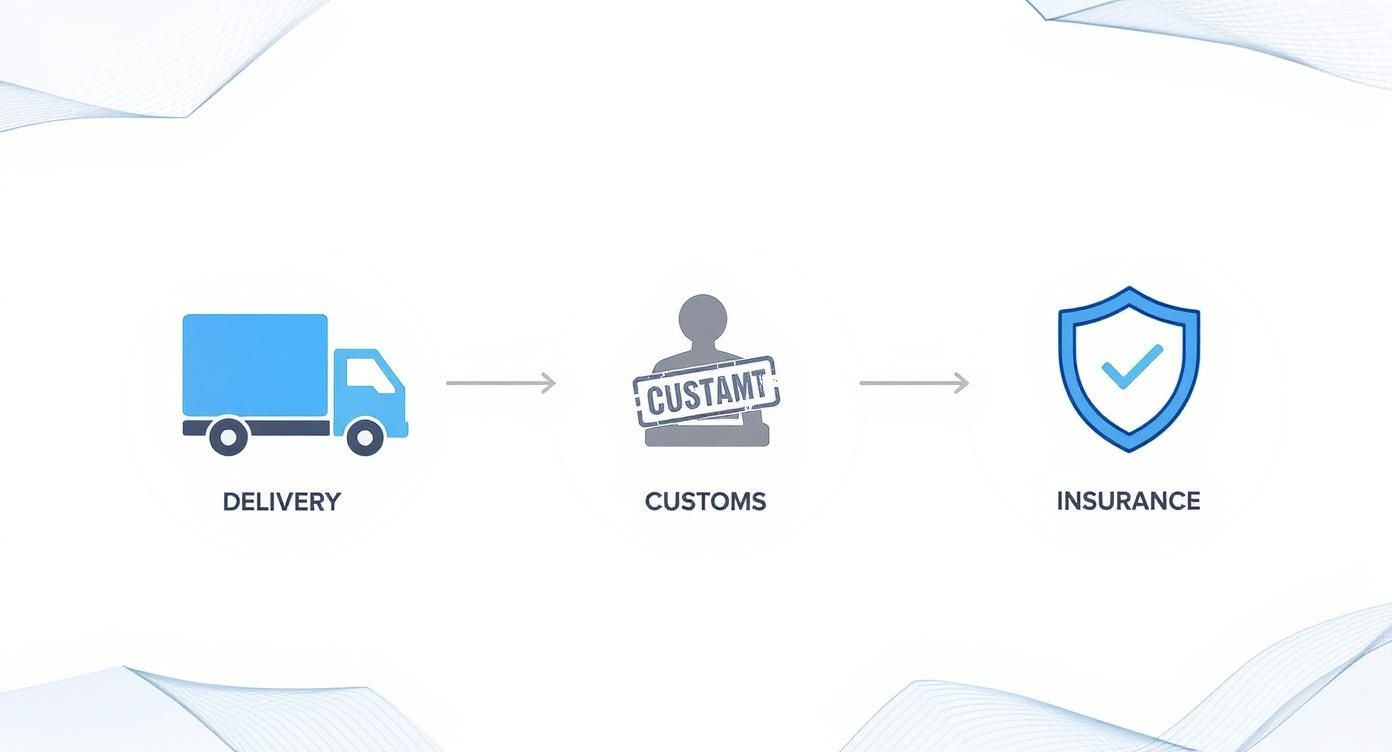
As you can see, the forwarder connects all these services into one smooth operation, eliminating the gaps that could otherwise lead to costly delays.
The Paperwork That Powers the Process
While moving boxes from A to B is the physical part of the job, it's the paperwork that makes or breaks an international shipment. An experienced forwarder is, first and foremost, a master of documentation. Get it wrong, and your goods aren't going anywhere.
Here are the three non-negotiable documents for any air freight shipment:
- Air Waybill (AWB): This is the master document. It’s the contract between you and the airline, containing every crucial detail about the shipment—origin, destination, contents, and terms.
- Commercial Invoice: This tells customs authorities what your goods are worth. It’s used to calculate import duties and taxes, so accuracy is absolutely critical.
- Packing List: This document itemises everything in your shipment—weights, dimensions, and the number of cartons. It lets carriers and customs officials verify the cargo without having to open every single box.
Think of these documents as your cargo’s passport. Each one must be present and correctly filled out for your goods to legally cross international borders. A single error can bring the entire shipment to a halt.
For anyone shipping from Alibaba or other major B2B platforms, getting a handle on this documentation is half the battle. It's a core piece of the puzzle for smooth, efficient importing.
Navigating Customs and Final Delivery
Once the plane touches down at the destination airport, your forwarder's work is far from done. Their local partner or agent on the ground takes over, managing the import customs clearance. This involves submitting all the required documents, paying any duties and taxes on your behalf, and getting the cargo released promptly. If you want a deeper dive, check out our guide on customs clearance services.
The scale of this industry is staggering. The China freight forwarding market, for example, hit USD 13,055.9 million in 2024 and is on track to reach USD 18,287.5 million by 2030. Air freight is the fastest-growing part of that, fueled by the e-commerce explosion between China and Europe.
With customs cleared, the final leg of the journey begins: the "last mile." The forwarder arranges local transport to deliver the goods from the airport straight to your warehouse or customer’s doorstep, completing the door-to-door service. Your products have arrived, safe and sound.
Breaking Down Air Freight Costs and Timelines
Let's get straight to the two questions that matter most: "How much is this going to cost?" and "When will it actually get there?" In air freight, the answers aren't always a simple number. Pricing is a dynamic puzzle, and understanding the pieces is the first step to setting a realistic budget and keeping your customers happy.
The biggest piece of that puzzle is what we call chargeable weight. Airlines have to consider both the actual weight of your shipment and the space it takes up. It's a bit like buying a plane ticket for a giant, feather-light teddy bear—it doesn't weigh much, but it occupies a valuable seat. Your forwarder will calculate both the actual weight and the volumetric weight, and the airline will bill you based on whichever is higher.
Unpacking the Surcharges and Fees
Beyond that base rate, your final invoice will have a few other line items. These aren't hidden fees; they're standard charges that cover the real-world costs of getting your goods from A to B. Knowing what they are ahead of time saves a lot of headaches.
You can almost always expect to see:
- Fuel Surcharges: Airlines adjust these to keep up with fluctuating global oil prices.
- Security Fees: These cover the mandatory screening and security checks required to get your cargo cleared for flight.
- Terminal Handling Charges: Think of these as the cost of moving your shipment through the airport warehouses at both ends of its journey.
- Customs Duties and Taxes: These are set by the government in the destination country and depend entirely on what you're shipping and its declared value.
Making sure your shipment is packed correctly from the start is also key to keeping costs in check. For a complete rundown, take a look at our guide on air freight packaging requirements to ensure everything is secure and compliant.
Understanding Transit Times and External Factors
Everyone knows air freight is fast, but "fast" isn't a single speed. The actual timeline really depends on the service level you pick and the route your cargo is flying.
For instance, a standard economy service from Shanghai to London typically takes about 5–7 days, offering a good balance of speed and cost. But if you have an urgent delivery, an express service can slash that down to just 1–3 days, though you'll pay a premium for that priority.
Don't forget about seasonality, either. The weeks before major holidays like Christmas or China's Golden Week are classic peak seasons. Cargo space becomes scarce, and both prices and transit times can climb as everyone rushes to ship at once.
We see this a lot on major e-commerce routes. In 2025, for example, Chinese air cargo forwarders were at the heart of a massive surge in shipments to Europe, fuelled by online retail giants. Demand on the China–Europe lane jumped by 4% in just three weeks of September 2025, driven by the pre–Golden Week rush and issues with rail freight. That spike was part of a bigger trend, contributing to a massive 58% year-on-year increase in cross-border e-commerce sales to Europe over the first nine months. You can read more about the growth of air cargo volumes on Xeneta.
A good freight forwarder won't hide these variables. They'll lay everything out clearly so you can make an informed choice that balances your budget with your delivery promises.
How to Choose the Right Forwarding Partner

Choosing the right air cargo forwarder isn’t just about ticking a box on your logistics to-do list; it’s one of the most critical strategic decisions you’ll make for your business. Think of them as an extension of your own team. The right partner brings calm and predictability to your supply chain, paving the way for growth. The wrong one? They can become a major bottleneck, leading to costly delays, frustrated customers, and a whole lot of headaches.
So, how do you find the right fit? It goes way beyond just comparing price quotes. You need to dig deeper and look at their network, their real-world expertise, and how they handle things when the unexpected happens—because it always does. A truly great forwarder aligns with your business goals, offering solutions that make sense for what you’re shipping, whether it’s high-value electronics or time-sensitive fashion goods.
Evaluating Network and Industry Specialisation
First things first, look at their global reach. Do they have a solid presence in the countries you’re shipping from and to? A forwarder with established offices or trusted local partners on both ends of your shipping lane is worth its weight in gold. They’re the ones who can navigate tricky local customs and manage that final-mile delivery without a hitch.
This is especially true for businesses shipping out of China, where the air cargo landscape is incredibly competitive. To get a sense of scale, the 2025 Transport Topics ranking shows major players like Best Services International Freight handling 320,810 tons and CTS International Logistics managing 371,113 tons. These aren't just numbers; they represent deep experience and capacity. You can see more details about the top airfreight forwarders on ttnews.com.
Next, zoom in on their specific industry expertise. Not all cargo is created equal.
- Perishables: Have they successfully managed cold chain logistics for food or pharmaceuticals before?
- High-Value Goods: What security measures do they have in place for things like electronics or luxury items?
- E-commerce: Do they understand the rhythm of smaller, frequent shipments that online retailers depend on?
A forwarder that already knows the ins and outs of your industry will anticipate problems you haven't even thought of yet.
Assessing Technology and Customer Service
In today's fast-moving market, you absolutely need to know where your stuff is. A modern forwarder must provide a solid technology platform that gives you real-time tracking and transparent updates. You should be able to see your shipment’s journey from the moment it’s picked up to its final delivery.
A great technology platform isn't just about a dot on a map; it's about control. It should give you easy access to documents, send alerts when milestones are hit, and let you manage your supply chain proactively instead of just reacting to problems.
But technology is only half the story. The human element is just as important. When a flight gets delayed or a shipment is held up in customs, who are you going to call? Great customer service means having a dedicated person to contact—someone who is responsive, knows what they’re talking about, and has the authority to actually solve problems.
You can test this right from the start. If they’re slow to respond to your quote request or give you vague answers now, just imagine what it’ll be like when your urgent shipment is stuck somewhere.
Air Cargo Forwarder Evaluation Checklist
To keep your evaluation organised, use a simple checklist. This helps you compare potential partners on an "apples-to-apples" basis and make a decision based on data, not just a gut feeling.
| Evaluation Criteria | Forwarder A | Forwarder B | Notes | Network Strength in Key Lanes | Industry Specialisation | Technology & Tracking Platform | Customer Service Responsiveness | Cost Transparency (All-in Quote) | Insurance Coverage Details | Problem-Solving Procedures | Client References/Case Studies |
|---|
By filling this out, you'll have a much clearer picture of which forwarder truly aligns with your needs.
Key Questions to Ask Potential Air Cargo Forwarders
Before signing anything, arm yourself with a list of direct questions. This is your chance to really vet their capabilities and make sure they’re the right fit. A good partner will welcome these questions and give you clear, confident answers.
Here are a few essential questions to get you started:
- What is your network of carriers and partners on our key shipping lanes? This tells you about their capacity and how flexible they can be.
- Can you provide a detailed, all-in cost breakdown? You’re looking for total transparency here. Avoid forwarders who are fuzzy about surcharges.
- What’s your standard procedure for handling shipping delays or customs holds? Their answer reveals a lot about their communication and problem-solving skills.
- What level of cargo insurance do you offer, and what exactly does it cover? Never assume your goods are fully protected. Get the specifics.
- Will we have a dedicated account manager, or will we be calling a general customer service line? A dedicated contact is almost always better for building a solid relationship.
- Can you provide references from other clients in our industry? Talking to businesses with similar needs is one of the best ways to understand a forwarder’s real-world performance.
By taking this structured approach, you’ll move beyond a simple price war. You'll be able to identify true air cargo forwarders who can act as genuine strategic partners, helping you build a stronger, more resilient supply chain for the long haul.
Your Top Questions About Air Cargo Forwarding, Answered
Even after you get the hang of the basics, some specific questions always seem to pop up when you start working with an air cargo forwarder. We get it. So, we've gathered the most common queries we hear from businesses just like yours to give you straight-up answers.
Think of this as your quick-reference guide. We’ll tackle the big concerns around liability, tracking, and the real differences between service types, so you can partner with a forwarder like Upfreights with total confidence.
Who’s on the Hook if My Cargo Is Lost or Damaged?
This is the big one, and the answer isn't as simple as pointing a finger. In reality, it's a shared responsibility governed by international rules, mainly the Montreal Convention. This treaty limits an airline's liability to a set amount based on weight, not the actual value of your goods.
What does that mean for you? It means the carrier's standard liability might only cover a tiny fraction of your financial loss. Imagine shipping a small, lightweight box of high-value microchips. If it goes missing, the standard payout would be minimal and nowhere near what you’ve actually lost.
That’s precisely why cargo insurance is non-negotiable for anything valuable. Your forwarder arranges this separate policy to cover the full declared value of your goods. Always, always opt for it to make sure you’re fully protected from the unexpected.
How Can I Actually Track My Air Freight Shipment?
In today's fast-moving market, knowing where your shipment is isn't a perk; it's essential. Any good air cargo forwarder will give you access to a tracking system that goes far beyond a simple courier-style number.
You should expect a dashboard or portal where you can see your shipment hit key milestones in its journey.
- Pickup Confirmed: Your goods are officially collected from the supplier.
- Departed Origin Airport: It's wheels up! Your cargo is in the air.
- Arrived at Destination Airport: The shipment has landed and is ready for the next step.
- Customs Cleared: All duties and taxes are settled, and the goods are released.
- Out for Delivery: The "last mile" truck is heading to the final destination.
Here at Upfreights, for example, our clients get real-time GPS tracking on over 270 routes. That kind of visibility lets you plan inventory, manage your production schedules, and give your own customers accurate updates they can rely on.
What's the Real Difference Between a Freight Forwarder and a Courier?
This is a super common point of confusion, especially for e-commerce brands. While both move packages, they're built for entirely different jobs. A good analogy is thinking of a taxi versus a city bus planner.
A courier service (like DHL, FedEx, or UPS) is the taxi. They’re perfect for smaller parcels and documents, running their own planes and vans in a closed, end-to-end network. Their service is standardised, fast, and simple for small items.
An air cargo forwarder is more like the bus system's master planner. They don’t own the planes; they’re the experts who book space on a huge range of commercial and cargo airlines. They specialise in larger shipments—from a few big boxes to multiple pallets—and find the smartest, most cost-effective route for your cargo. Forwarders handle the complex stuff, like customs paperwork and special handling, that couriers often won't touch.
Can a Forwarder Handle Dangerous or Hazardous Goods?
Absolutely, but only if they're specialised. Many air cargo forwarders are certified to manage what the industry calls "Dangerous Goods" (DG) or "Hazardous Materials" (Hazmat). This isn't just corrosive chemicals; the category includes everyday items like products with lithium batteries, perfumes, and even some types of paint.
Shipping these items by air is controlled by incredibly strict rules from the International Air Transport Association (IATA). A forwarder handling DG cargo must have staff who are professionally trained and certified in these regulations.
This expertise covers:
- Correct Classification: Knowing exactly how to identify and categorise the material.
- Specialised Packaging: Using UN-approved containers designed to prevent leaks or accidents.
- Flawless Paperwork: Applying the right hazard labels and filling out the mandatory Shipper's Declaration for Dangerous Goods.
Trying to ship these items without a certified expert isn't just risky; it’s illegal and can lead to massive fines and blacklisting. Be upfront with your forwarder about everything in your shipment to keep things safe and compliant.